Makashi, or Form II, is a lightsaber combat form renowned for its elegance and precision. Developed as a direct response to the more generalist Shii-Cho, Makashi specializes in lightsaber-to-lightsaber dueling, prioritizing footwork, blade control, and energy efficiency. It's a style that favors finesse over brute strength, making it a challenging but rewarding discipline for those seeking mastery in lightsaber combat.
While the advent of blasters and other weaponry led to the rise of forms like Soresu, Makashi remains a valuable foundation for understanding lightsaber combat principles. Its emphasis on anticipating an opponent's moves and exploiting weaknesses makes it a potent tool in the hands of a skilled practitioner. This guide will introduce you to the fundamental elements of Makashi, providing a solid base for further study and practice. Remember that mastery requires dedication, discipline, and respect for the art.
Embark on this journey with us to learn the basic stances, movements, and techniques that define Makashi. Understand its core principles, and perhaps you'll find yourself drawn to the elegant lethality that defines this combat form. Remember safety first, and practice responsibly.
Step 1: The Makashi Salute
The Makashi salute serves as both a challenge and a demonstration of skill. It begins with the lightsaber held vertically in front of your face, hilt near your forehead. Then, with a controlled motion, bring the blade down and extend your arm, pointing the tip of the lightsaber downward and away from your body. This movement can be embellished with spins or flourishes, allowing you to subtly adjust your grip and gauge your opponent's reaction. The salute communicates confidence and readiness for engagement.
Practical Details: Practice this movement slowly at first, focusing on maintaining a smooth, controlled arc. As you become more comfortable, gradually increase the speed and add embellishments. Potential Mistake: Avoid making the salute too aggressive or theatrical, as this can be perceived as arrogant and may give your opponent an advantage. It should be a statement of intent, not an invitation to a brawl.

Step 2: One-Handed Grip and Footwork
Makashi emphasizes precision and agility, which are best achieved with a one-handed grip. This allows for greater wrist mobility and faster blade manipulation. Ideally, a curved lightsaber hilt will further enhance maneuverability. The footwork in Makashi is characterized by forward and backward movements, creating distance and closing gaps to maintain optimal engagement range. Lateral movement is less common, as it can compromise balance and leave you vulnerable.
Practical Details: Start by practicing basic forward and backward steps, focusing on maintaining a stable stance and a fluid transfer of weight. Gradually incorporate blade movements into your footwork drills. Real World Considerations: One-handed grips require strong wrist and forearm muscles, so consider supplemental exercises to strengthen these areas. Potential Mistakes: Avoid crossing your feet or becoming flat-footed, as this will hinder your mobility and leave you open to attacks. Don't be afraid to experiment with small sidesteps to maintain your balance and control.
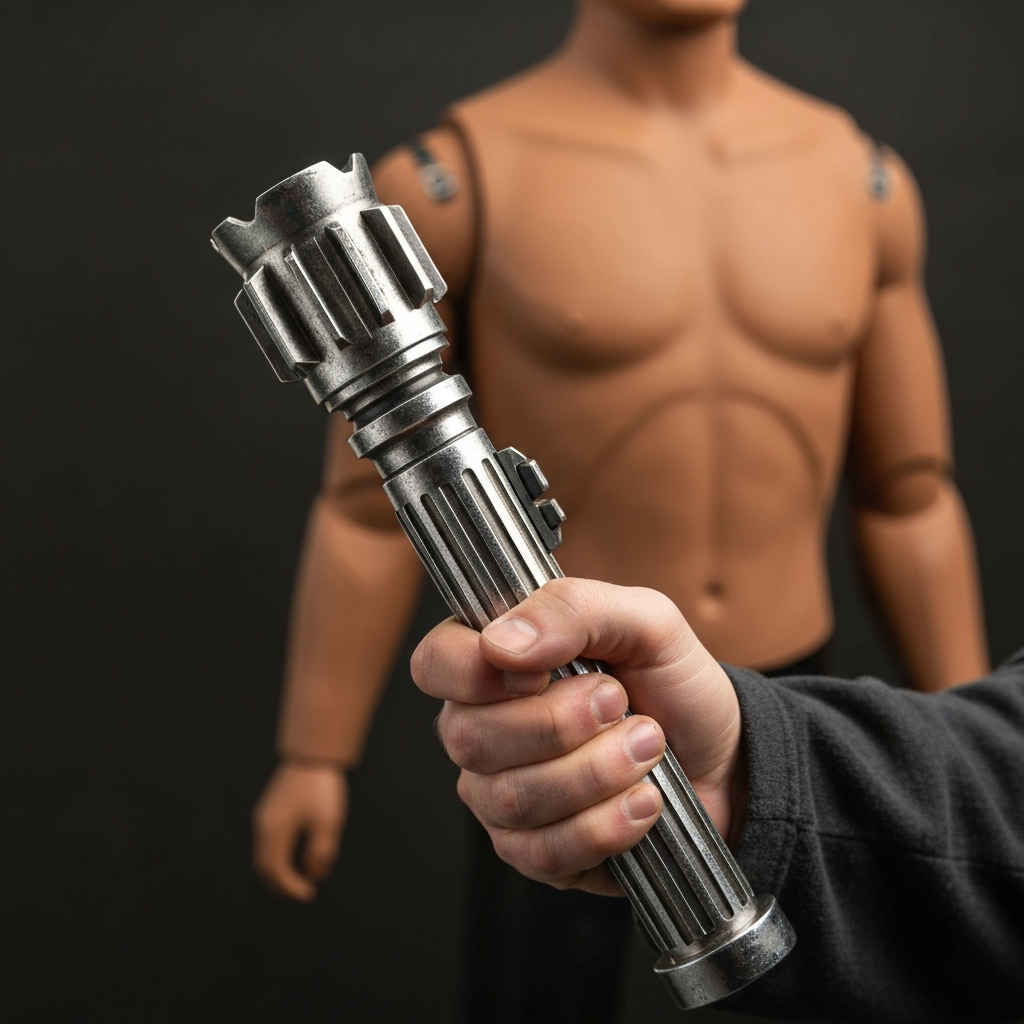
Step 3: Quick, Agile Movements
Makashi is a style of rapid, precise strikes, not powerful, sweeping blows. The goal is to overwhelm your opponent with speed and accuracy, disrupting their rhythm and exploiting openings in their defenses. Practicing with one hand behind your back can help develop balance and focus on your blade work. Remember, improvisation is key – don't become predictable by relying on the same moves. Think on your feet and adapt to your opponent's actions.
Practical Details: Use a timer to work in short bursts and force you to make decisive actions. Pro-Tip: Watch fencing footage to get some ideas on how you can apply Makashi and other principles to your practice. Potential Mistake: Resist the urge to telegraph your movements. The most effective strikes are those that come as a surprise. Also, ensure you have enough space to practice safely.
Step 4: Recognizing and Mitigating Weaknesses
Makashi is not without its flaws. It struggles against opponents who rely on brute strength, those who employ multiple attackers, or encounters involving blaster fire. While extensive training can mitigate the latter two weaknesses, the first remains a significant challenge. A sufficiently strong opponent can overwhelm a Makashi user with relentless attacks, breaking through their defenses and landing a decisive blow.
Safety Considerations: Use safe training weapons and gear and ensure plenty of space for movement. Practical Details: Practice evasive maneuvers and develop strategies for dealing with stronger opponents. Consider incorporating elements from other forms, such as Soresu's defensive techniques, to supplement your Makashi skills. Real World Considerations: There is no substitute for quality instruction and practice with real instructors or training partners.
Step 5: Weapon Retention
One of the core tenets of Makashi is to avoid being disarmed. As a counter to Shii-Cho, which often seeks to disarm opponents, Makashi emphasizes maintaining control of your lightsaber at all costs. This requires a secure grip, precise movements, and a focus on anticipating and deflecting disarming techniques.
Practical Details: Do grip strength exercises to aid with holding onto the lightsaber. Real World Considerations: While practicing, be sure to wear proper safety equipment. Potential Mistake: A loose grip, overextension, or predictable movements can all make you vulnerable to disarming techniques. Make sure you avoid these. Focus on wrist flexibility and finger strength to help improve grip.

FAQ Section
- Q: Is Makashi effective against blaster fire?
- A: While Makashi wasn't designed primarily to counter blaster fire, skilled practitioners can deflect blaster bolts with precision and efficiency. However, forms like Soresu are generally considered more effective for this purpose.
- Q: Can Makashi be used with a double-bladed lightsaber?
- A: While theoretically possible, the precision and finesse of Makashi are best suited to a single-bladed lightsaber. The added weight and complexity of a double-bladed weapon can hinder the fluid movements and precise strikes that define the form.
- Q: What is the ideal body type for a Makashi practitioner?
- A: Makashi favors agility and precision over brute strength, making it accessible to individuals of various body types. However, a lean and flexible build can be advantageous for executing the form's intricate footwork and blade movements.
Tools or Materials Required
- Lightsaber (or training equivalent)
- Open space for practice
- Training partner (optional)
- Mirrors for self-assessment
- Comfortable and appropriate clothing
Conclusion
Learning the basics of Makashi is a journey into the heart of lightsaber dueling. It demands precision, agility, and a deep understanding of blade control. While it has its weaknesses, mastering the fundamentals provides a solid foundation for further exploration and adaptation. Remember to practice safely, respect the art, and strive for continuous improvement. With dedication and perseverance, you can unlock the elegant lethality of Form II and become a true master of the blade.