Pesto, that vibrant green sauce of basil, garlic, pine nuts, Parmesan cheese, and olive oil, is a culinary staple. But what do you do when your garden basil explodes, or you've made a batch that's simply too large to use immediately? The answer, fortunately, is simple: freeze it! Freezing pesto is an excellent way to preserve its fresh flavor and vibrant color for months to come. This guide will walk you through the best methods for freezing pesto, ensuring that your future pasta dishes and sandwiches are bursting with summer's goodness.
While commercially prepared pesto is available year-round, nothing compares to the taste of homemade pesto crafted with fresh, seasonal ingredients. The challenge, however, is pesto's relatively short shelf life. Left in the refrigerator, it can quickly lose its bright green hue and develop an off-flavor. Freezing halts this process, locking in the pesto's character until you're ready to use it. Proper freezing techniques are crucial to maintaining pesto’s quality, preventing freezer burn, and minimizing discoloration.
This guide covers multiple freezing methods, along with tips for thawing and using your frozen pesto, ensuring that you can enjoy the taste of summer all year long. We'll explore options for individual portions, large batches, and everything in between. Let’s dive in!
Step 1: Prepare Your Pesto for Freezing
Choosing the Right Container
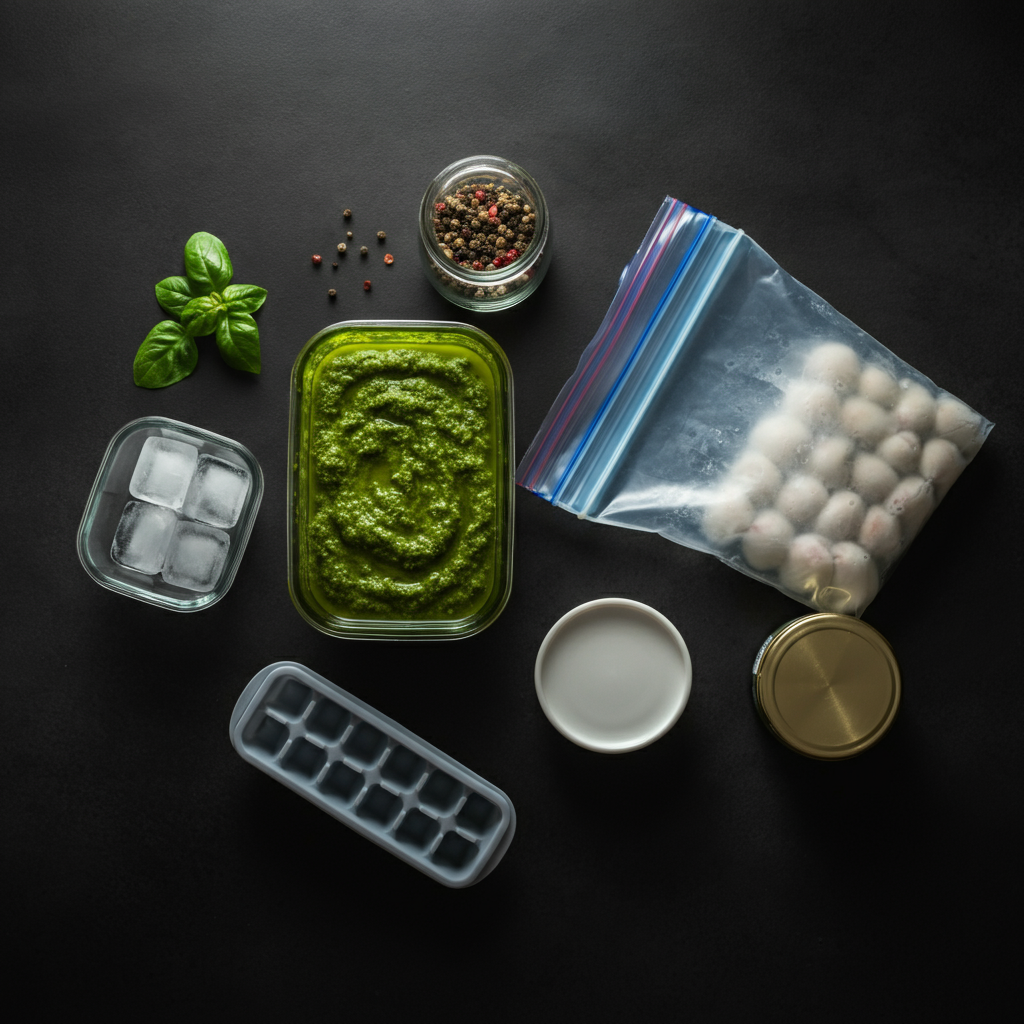
The first step to successfully freezing pesto is selecting the right container. You have several options: ice cube trays, freezer-safe containers (plastic or glass), or freezer bags. Ice cube trays are perfect for portioning out pesto into small, convenient amounts, ideal for adding a dollop to soups or sauces. Freezer-safe containers work well for larger batches intended for use in pasta dishes or other recipes where you'll need a significant quantity. Freezer bags are space-efficient, especially if you flatten them before freezing. Ensure that whatever container you choose is airtight to prevent freezer burn and odor absorption. If using glass, leave some headspace, as liquids expand when frozen.
Step 2: Portion and Protect Your Pesto
Individual Portions with Ice Cube Trays
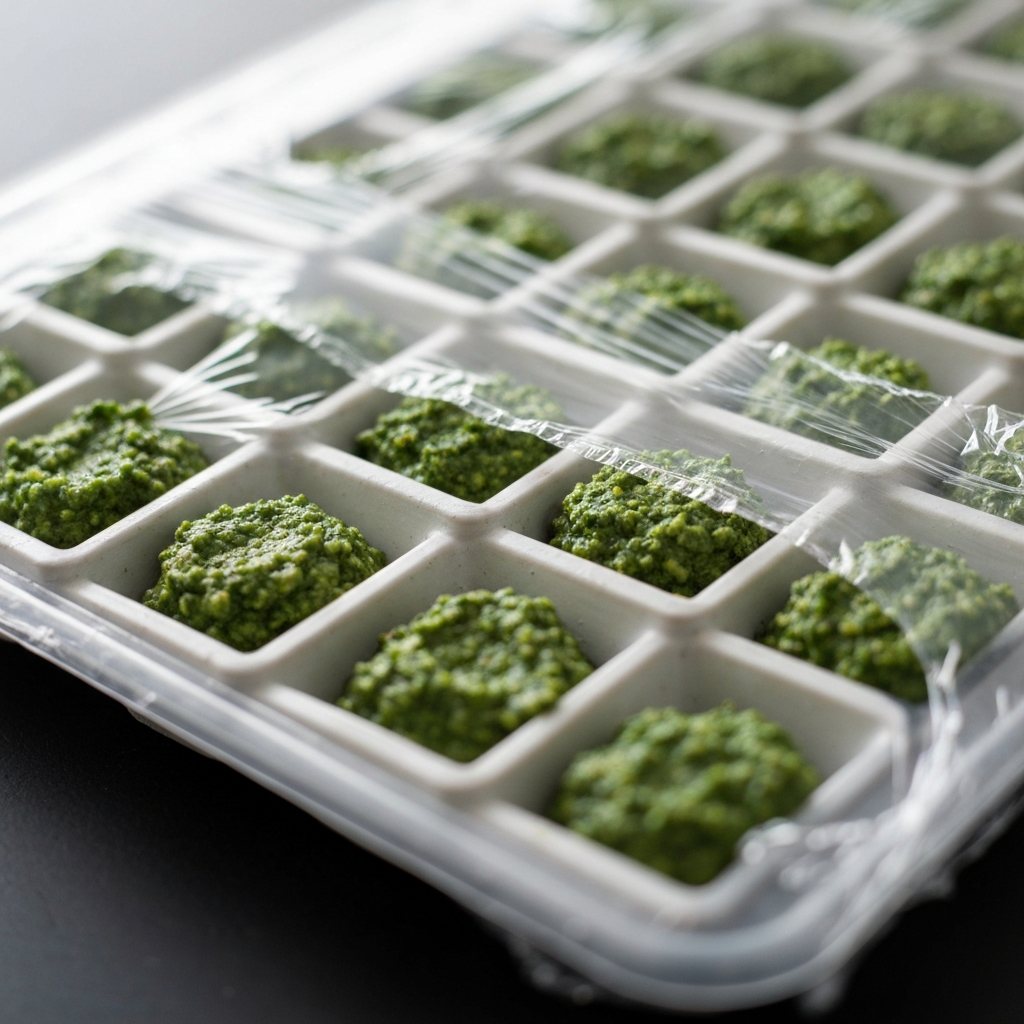
If you're opting for individual portions, scoop about 2 tablespoons (30 ml) of pesto into each well of an ice cube tray. This makes it easy to grab exactly what you need for a single serving. Once the tray is filled, gently press a piece of plastic wrap directly onto the surface of the pesto in each cube. This helps to prevent freezer burn and discoloration. The plastic wrap creates a barrier between the pesto and the air, minimizing oxidation. Place the filled ice cube tray in the freezer for at least 4 hours, or preferably overnight, until the pesto is completely frozen.
Step 3: Transfer to Long-Term Storage
From Tray to Freezer Bag or Container
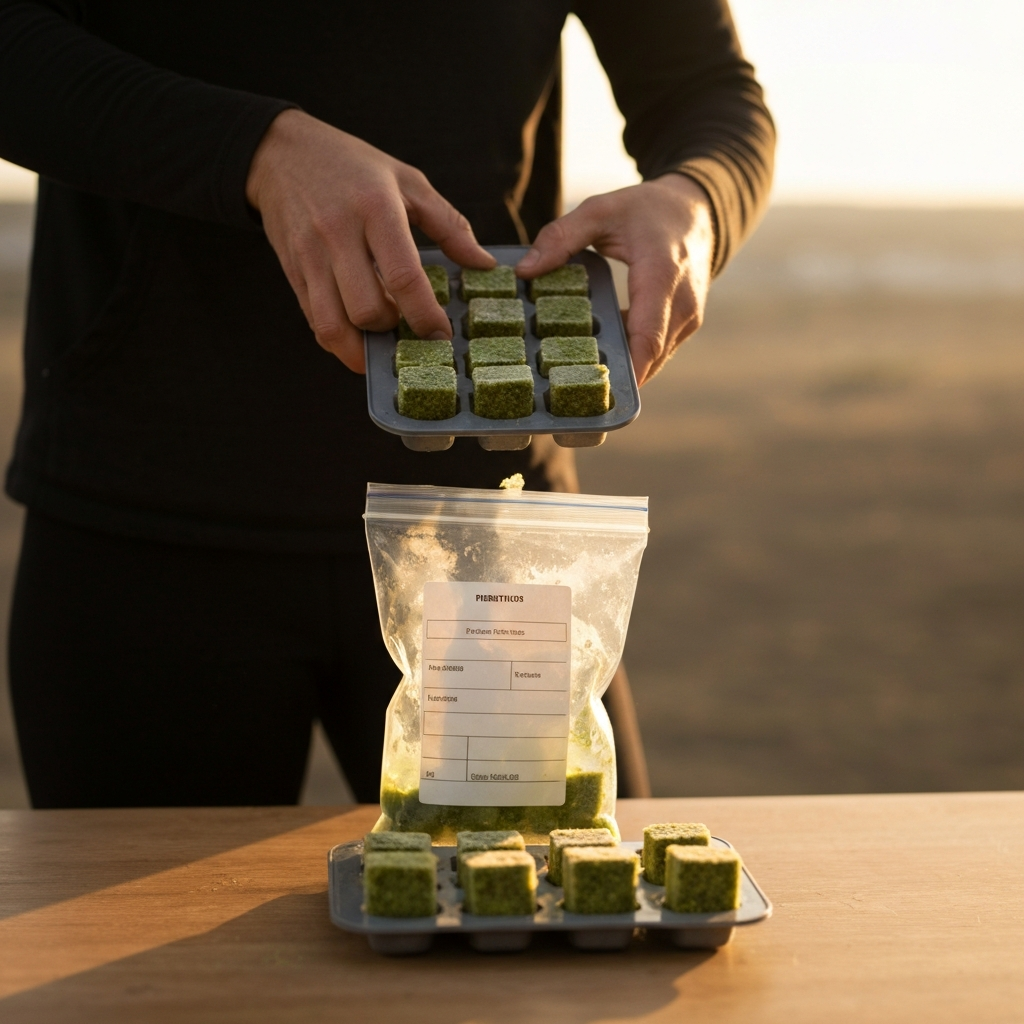
Once the pesto cubes are frozen solid, remove the ice cube tray from the freezer. Quickly pop each cube out and transfer them to a freezer-safe plastic bag or airtight container. Label the bag or container with the date using a permanent marker. Accurate labeling is crucial for tracking how long the pesto has been frozen. Squeeze out as much air as possible from the freezer bag before sealing it tightly. This helps to prevent freezer burn and maintain the quality of the pesto. Store the bag or container in the freezer for up to 6 months for optimal flavor and texture.
Step 4: Freezing Larger Batches in Containers
Packing a Freezer-Safe Container
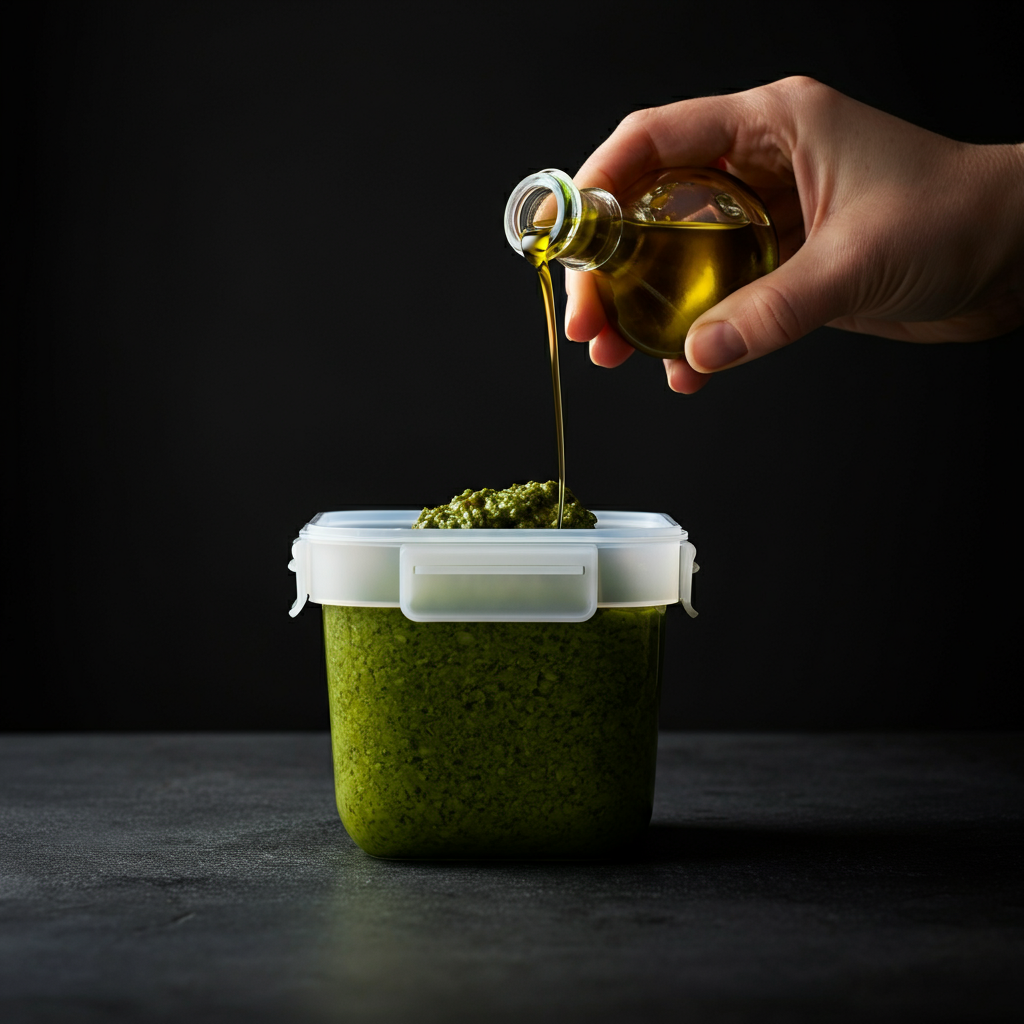
If you're freezing a larger batch of pesto in a freezer-safe container, ensure that the container is clean and dry. Pour the pesto into the container, leaving about ½ inch (1.3 cm) of headspace between the pesto and the lid. This allows for expansion as the pesto freezes. Before sealing the container, pour a thin layer of olive oil over the surface of the pesto. The olive oil acts as a protective barrier, preventing the pesto from darkening and drying out. Seal the lid tightly, label the container with the date, and place it in the freezer.
Step 5: Freezing Pesto in a Flat Layer
Creating Pesto Sheets for Easy Portions
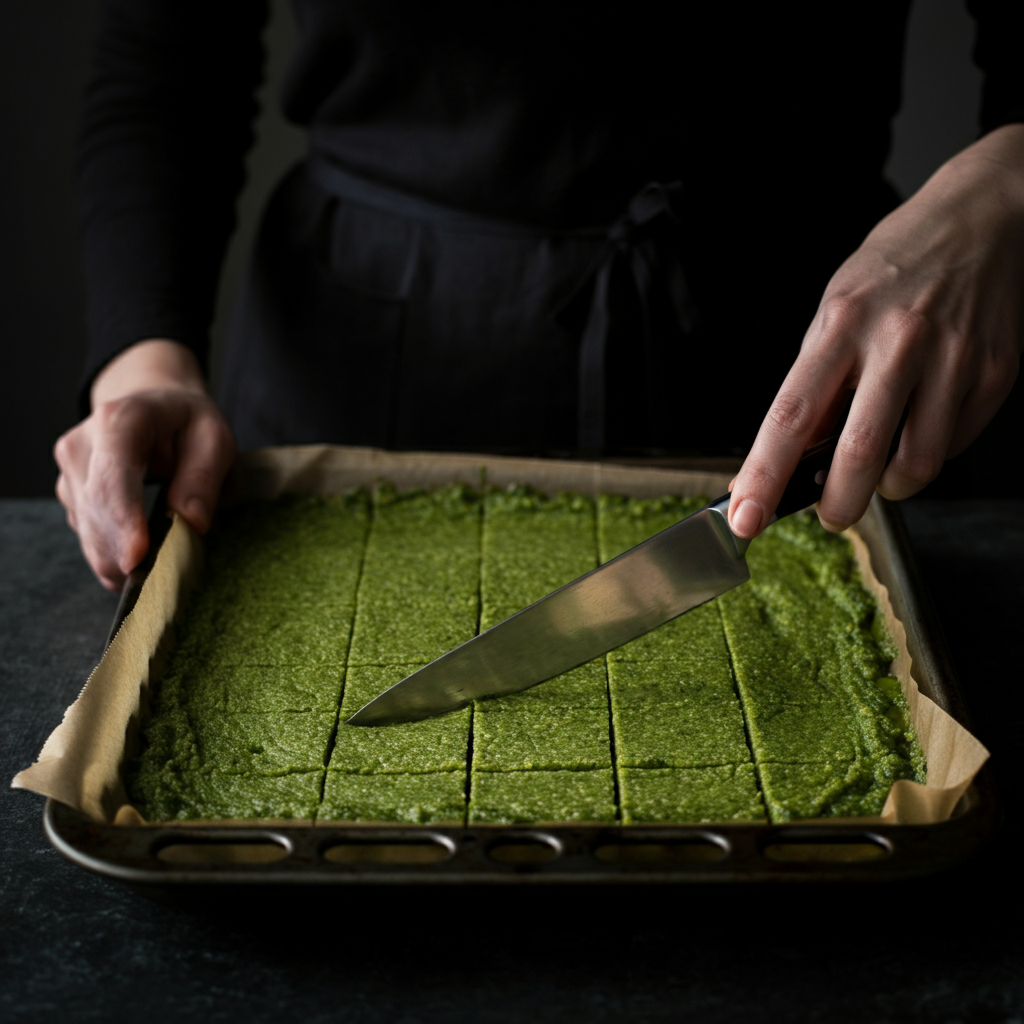
Another effective method is to freeze the pesto in a thin layer on a baking sheet. Line a baking sheet with parchment paper or a silicone mat. Spread the pesto evenly over the prepared baking sheet, creating a thin layer. Place the baking sheet in the freezer and freeze until the pesto is solid, typically overnight. Once frozen, use a knife to cut the pesto into smaller, manageable pieces, such as squares or triangles. Transfer the frozen pesto pieces to a freezer-safe bag, label with the date, and store in the freezer. This method allows you to easily break off the amount of pesto you need for individual recipes.
Step 6: Thawing and Using Frozen Pesto
Releasing the Flavor
When you're ready to use your frozen pesto, there are several thawing methods. For individual portions frozen in ice cube trays, simply remove the desired number of cubes and place them in a bowl at room temperature for about 20-30 minutes. You can also microwave them in 30-second intervals until thawed, stirring in between each interval. For larger batches frozen in containers, transfer the container to the refrigerator and allow it to thaw slowly overnight. Never thaw pesto at room temperature for extended periods, as this can encourage bacterial growth. Once thawed, stir the pesto well to ensure an even consistency.
Common Mistakes to Avoid
- Not Using an Airtight Container: Exposure to air can cause freezer burn and discoloration.
- Forgetting to Add Olive Oil: A layer of olive oil on top of the pesto before freezing helps to protect its color and flavor.
- Not Labeling and Dating: This can lead to forgotten pesto and wasted food.
- Overfilling Containers: Liquids expand when frozen, so leave headspace to prevent containers from cracking.
- Thawing at Room Temperature for Too Long: This can create a breeding ground for bacteria.
Pro Tips
- Consider freezing pesto without Parmesan cheese. Add fresh Parmesan when you thaw the pesto for the best flavor.
- If your pesto seems a bit dry after thawing, add a drizzle of olive oil to restore its creamy texture.
- For maximum flavor retention, use your frozen pesto within 3-6 months.
FAQ Section
- Can I refreeze pesto that has been thawed?
- Refreezing thawed pesto is not recommended, as it can compromise its texture and flavor. It's best to freeze pesto in small portions so you only thaw what you need.
- How can I tell if my frozen pesto has gone bad?
- If your frozen pesto has a significant amount of freezer burn, an off-odor, or a drastically altered color, it's best to discard it.
- Can I freeze pesto that contains nuts?
- Yes, you can freeze pesto that contains nuts. The nuts may become slightly softer after thawing, but the overall flavor will be preserved.
Conclusion
Freezing pesto is a simple yet effective way to preserve the taste of summer and reduce food waste. By following these steps and avoiding common mistakes, you can enjoy vibrant, flavorful pesto year-round. Whether you choose to freeze it in ice cube trays, containers, or flattened in freezer bags, you'll always have a taste of fresh basil on hand for your culinary creations. So, embrace the bounty of your basil harvest and freeze pesto like a pro!