The cross, a symbol instantly recognizable across cultures and throughout history, holds profound significance for various religions and belief systems. While most commonly associated with Christianity, the cross predates Christianity and appears in numerous forms, each imbued with unique historical, cultural, and symbolic meaning. Understanding these diverse variations offers valuable insights into the evolution of religious iconography and the rich tapestry of human spirituality.
This guide delves into the world of crosses, exploring their origins, diverse designs, and the symbolism they represent. From the foundational Christian crosses to heraldic emblems and regional variations, we will unpack the history and meaning behind these potent symbols. Whether you're a student of religious history, an artist seeking inspiration, or simply curious about the world around you, this exploration will provide a deeper appreciation for the multifaceted nature of the cross.
Prepare to embark on a fascinating journey through the history and artistry of crosses, uncovering the stories they tell and the values they represent.
1. Foundational Christian Crosses
Christian crosses, the most widely recognized symbols, derive their meaning from the crucifixion of Jesus Christ. These foundational crosses established core themes of faith, sacrifice, and redemption. Understanding them provides a crucial foundation for appreciating the variations that followed. They are the bedrock upon which many later crosses are based.
1.1. Latin Cross
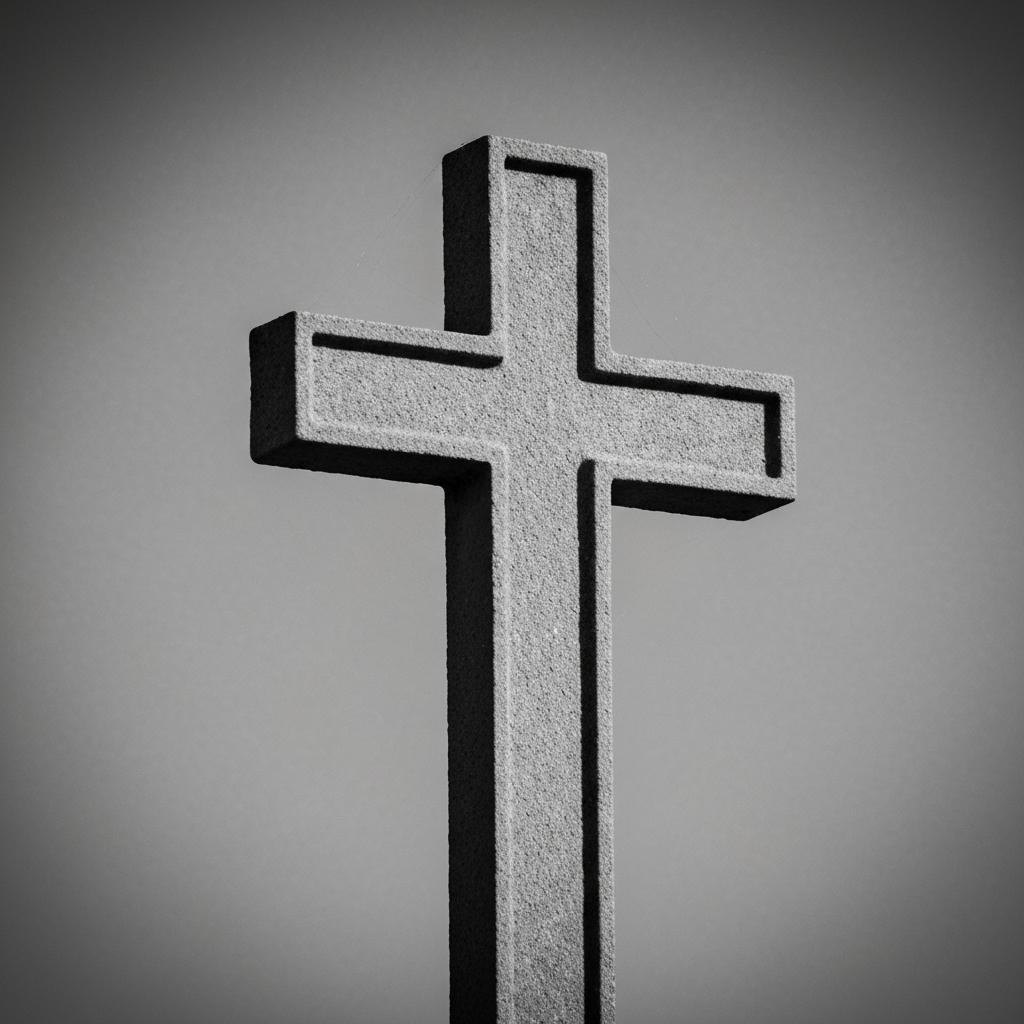
The Latin Cross, often referred to as the crux immissa, is the most recognizable Christian cross. It features a longer vertical beam intersected by a shorter horizontal beam. Symbolizing the cross upon which Jesus Christ was crucified, it represents sacrifice, redemption, and faith. Its simple design makes it widely used in churches, cemeteries, and personal adornments. Be aware that some may find it disrespectful to display the Latin cross casually, given its sacred meaning for Christians. Its form has also inspired the layout of numerous churches throughout the ages.
1.2. Greek Cross
Distinguished by its four arms of equal length, the Greek Cross holds significance in both Christian and secular contexts. Historically popular in Christian churches, it serves as the national symbol for Greece, Switzerland, and Tonga, demonstrating its wider cultural relevance. Its symmetrical design lends it a sense of balance and harmony. Although similar in symbolism to the Latin Cross, its equal arms distinguish it visually. Consider its widespread secular use when using in religious contexts.
1.3. Orthodox Cross
Also known as the Russian Orthodox Cross, this variation features three horizontal bars. The top bar represents the inscription "INRI" (Jesus of Nazareth, King of the Jews). The middle bar signifies the crossbeam upon which Jesus was nailed, and the bottom, slanted bar symbolizes the footrest. The slant is typically interpreted as representing the thief who repented at the crucifixion rising to heaven, while the unrepentant thief descends. The Orthodox Cross is a powerful symbol of Eastern Orthodox Christianity and carries deep theological meaning. Ensure that the specific context aligns if adopting this cross; it is highly representative of a specific branch of Christianity.
2. Early Christian Crosses
Early Christians, facing persecution, often utilized veiled symbols to represent their faith. These crosses incorporate subtle adaptations of the standard cross form, providing a layer of secrecy and nuanced meaning.
2.1. Staurogram
The Staurogram combines the Greek letters tau (T) and rho (P) to create a symbol resembling a person hanging on a cross. It is believed to have resonated with early Christians as a visual representation of Christ's crucifixion. The exact origins remain unclear, but its use demonstrates the creativity of early Christians in expressing their faith. It may appear abstract to modern viewers unfamiliar with its origins.
2.2. Chi-Rho
The Chi-Rho, also known as the Christogram or Labarum, is formed by superimposing the Greek letters chi (X) and rho (P), the first two letters of "Christ" in Greek. Legend states that Emperor Constantine saw this symbol in a vision before a battle and, after his victory, legalized Christianity. The Chi-Rho is often accompanied by the Greek letters alpha and omega, representing God's eternal nature. It is a potent symbol of Christian triumph and imperial endorsement. Its historical association with Constantine lends it significant weight.
2.3. Anchor Cross
The Anchor Cross combines the Latin Cross with an anchor at its base. The anchor symbolizes hope, steadfastness, and security in Christ. It is often associated with St. Clement, who was martyred by being tied to an anchor and thrown into the sea. The Anchor Cross serves as a powerful reminder of faith amidst adversity and the promise of eternal life. Its connection to maritime symbolism can add another layer of interpretation. It is sometimes called St. Clement's Cross.
2.4. Tau Cross
The Tau Cross, shaped like the Greek letter tau (T), represents the cross used in Roman crucifixions. It was adopted by early Christians as a symbol of Christ's sacrifice and their own faith. The Tau Cross is also associated with St. Anthony and the Franciscan Order. Its simple form makes it easily recognizable. It's also known as St. Anthony's Cross and associated with the Franciscan Order.
2.5. Crucifix Cross
This is simply a Latin cross that also includes a figure of Jesus Christ. Originating around the 6th century CE, the cross emphasizes Christ's sacrifice on the cross.
3. Christian Crosses with Specific References
Certain crosses are associated with specific figures, events, or concepts within Christian theology. These crosses enrich the symbol with targeted meaning and offer a deeper understanding of Christian beliefs.
3.1. Marian Cross
The Marian Cross depicts a Latin Cross with the letter "M" at its base, representing Mary, the Mother of God. Popularized by Pope John Paul II, who included it on his coat of arms, the Marian Cross symbolizes Mary's role in salvation and her intercession for believers. It's a symbol of veneration for Mary within the Catholic tradition. Keep in mind that the precise design may vary. The 'M' should clearly be present at the base.
3.2. Patriarchal Cross
The Patriarchal Cross resembles the Orthodox Cross but lacks the slanted bottom bar. The upper horizontal bar represents the authority of the church, while the lower bar symbolizes the crucifixion of Jesus Christ. This cross is common in Eastern Orthodox churches and signifies the hierarchical structure of the church. It has been a popular design within the Eastern Orthodox church.
3.3. Papal Cross
This variation features three horizontal bars above the main crossbeam, each bar decreasing in length as they ascend. Each bar represents the Pope's authority over different realms: the church, the world, and heaven. This cross is reserved for the Pope and represents his supreme authority within the Catholic Church. Only the Pope is entitled to use this symbol.
3.4. Calvary Cross
The Calvary Cross, also known as the Graded Cross, features three steps at its base, representing Golgotha, the hill where Jesus was crucified. The steps also symbolize faith, hope, and charity, the three theological virtues. This cross is a reminder of Christ's sacrifice and the spiritual ascent toward God. The steps ground the cross and provide a visual foundation for its spiritual symbolism.
4. Christian Saint Crosses
Individual saints, revered figures in Christian tradition, are often associated with unique cross designs. These crosses reflect the saint's life, martyrdom, or patronage, adding a personal dimension to the universal symbol.
4.1. St. Peter's Cross
The St. Peter's Cross is an inverted Latin Cross, referencing the Apostle Peter's crucifixion upside down. Peter requested this form of execution, believing himself unworthy to die in the same manner as Jesus. This cross symbolizes humility, unworthiness, and a willingness to embrace suffering for Christ. It is sometimes mistakenly associated with Satanism, but its origin is firmly rooted in Christian tradition. Double-check the target audience's understanding of the symbol.
4.2. St. Andrew's Cross
Also known as the Saltire, this cross is shaped like the letter "X." Tradition holds that St. Andrew was crucified on a cross of this shape. The St. Andrew's Cross is the national flag of Scotland and is incorporated into the Union Jack of the United Kingdom. Its distinct shape makes it easily recognizable. Bear in mind its connection to Scotland and the UK when using this symbol. It predates St. Andrew but is now primarily associated with him.
4.3. St. George's Cross
The St. George's Cross is a red cross on a white background. St. George is the patron saint of England, and his cross is the national flag of England. It also features prominently in the flags of other nations and regions. The St. George's Cross symbolizes courage, chivalry, and Christian faith. It is often seen at sporting events and other national celebrations in England. The cross was adopted by England as its official symbol in 1190 CE.
5. Heraldic Christian Crosses
Heraldic crosses are stylized forms used in coats of arms and other heraldic designs. These crosses often incorporate geometric patterns, floral motifs, or other decorative elements, lending them a distinctive and visually appealing character. They reflect the history and identity of families, institutions, and nations.
5.1. Templar Cross
The Templar Cross, traditionally depicted in red, is associated with the Knights Templar, a medieval Catholic military order. It typically resembles a Latin Cross with flared or triangular ends on each arm. This cross symbolizes the Templars' military strength, Christian faith, and commitment to protecting pilgrims in the Holy Land. The Knights Templar were a Catholic military group that participated in the Crusades.
5.2. Pattée Cross
The Pattée Cross is a thick, compressed cross with flared sides. It dates back to the 12th century Europe, where crusaders and knights often displayed it. It's important to note that the Pattée Cross is the basis for the design of the Nazi Iron Cross, which makes it a relatively unpopular design these days. It was famously associated with the Teutonic Knights.
6. Regional Christian Crosses
Various regions around the world have developed their unique interpretations of the Christian cross, reflecting their local cultures, traditions, and artistic styles. These crosses offer a glimpse into the diverse expressions of Christian faith across the globe.
6.1. Celtic Cross
The Celtic Cross, characterized by a ring encircling the intersection of the cross arms, is strongly associated with Ireland and Celtic Christianity. The ring is believed to represent eternity, unity, or the sun. Celtic Crosses often feature intricate knotwork and interlaced designs, reflecting the artistic traditions of the Celts. These are very commonly found in cemeteries in Ireland and Scotland. They go all the way back to the 10th century CE.
6.2. Coptic Cross
The Coptic Cross is a highly elaborate symbol used by Coptic Christians in Egypt. This angular and often ornamented cross is frequently tattooed on the wrists of Coptic Christians as a sign of their faith in a Muslim-majority country. The Coptic Cross reflects the rich artistic heritage of Coptic Christianity. You'll often see this cross tattooed on the wrists of Coptic Christians.
6.3. Jerusalem Cross
The Jerusalem Cross, also known as the Crusader's Cross, consists of a large Greek Cross surrounded by four smaller Greek Crosses. The large cross represents Christ, while the four smaller crosses symbolize the four Gospels or the four corners of the earth. This cross is closely associated with the city of Jerusalem and the Crusades. Each of the smaller cross's arms ends in a T-shape.
7. Non-Christian Crosses
While the cross is most commonly associated with Christianity, similar symbols appear in other religions and cultures, often predating Christianity. These non-Christian crosses carry diverse meanings, reflecting the universal human impulse to symbolize spiritual concepts. Be careful not to assume a Christian origin when encountering a cross symbol in a different cultural context.
7.1. Ankh
The Ankh is an ancient Egyptian symbol shaped like a cross with a loop at the top. It represents eternal life, reincarnation, and the life-giving power of the sun. The Ankh was commonly depicted in Egyptian art and was worn as an amulet. It's one of the most recognizable symbols of ancient Egypt. It represents eternal life.
7.2. Swastika
The Swastika is an ancient religious symbol that has appeared in various cultures throughout history. It was adopted by the Nazi Party in the 20th century, becoming a symbol of hate, antisemitism, and genocide. While originally representing good fortune and well-being, the Swastika is now primarily associated with Nazism. Its history and negative association require extreme caution and sensitivity. Originally representing rebirth, the four Vedas, and the four goals of life in the Hindu tradition, its image is now irrevocably tainted.
Conclusion
The cross, in its myriad forms, serves as a powerful testament to the enduring human quest for meaning, faith, and connection to something greater than oneself. From the foundational Christian crosses that embody sacrifice and redemption to the regional variations that reflect local cultures and the non-Christian crosses that predate Christianity, each design carries a unique story and symbolism. By understanding the diverse types of crosses, we gain a deeper appreciation for the rich tapestry of human spirituality and the enduring power of symbols to shape our beliefs and values.