For millennia, Chinese mythology has provided a rich tapestry of gods, goddesses, and immortals who have profoundly influenced the culture, beliefs, and values of Chinese society. These deities, each with their unique stories and domains, have shaped everything from art and literature to philosophy and daily life.
Understanding Chinese myth gods offers a fascinating glimpse into the Chinese worldview, revealing how the ancient Chinese understood the universe, explained natural phenomena, and sought guidance for navigating life's challenges. From the creation of the world to the intricacies of human relationships, these myths provide a framework for understanding the Chinese cultural landscape. This guide will walk you through some of the most prominent figures in the Chinese pantheon and show you how their stories continue to resonate today.
Whether you are a student of mythology, a lover of Chinese culture, or simply curious about the world's diverse belief systems, this comprehensive guide will provide a valuable introduction to the captivating realm of Chinese myth gods. Prepare to embark on a journey through legends, explore the powers and responsibilities of these deities, and discover the enduring legacy of their stories.
This guide will explore several well-known and lesser-known deities, providing insight into their origin stories, attributes, and significance within the vast landscape of Chinese mythology.
Step 1: Understanding the Jade Emperor (玉皇)
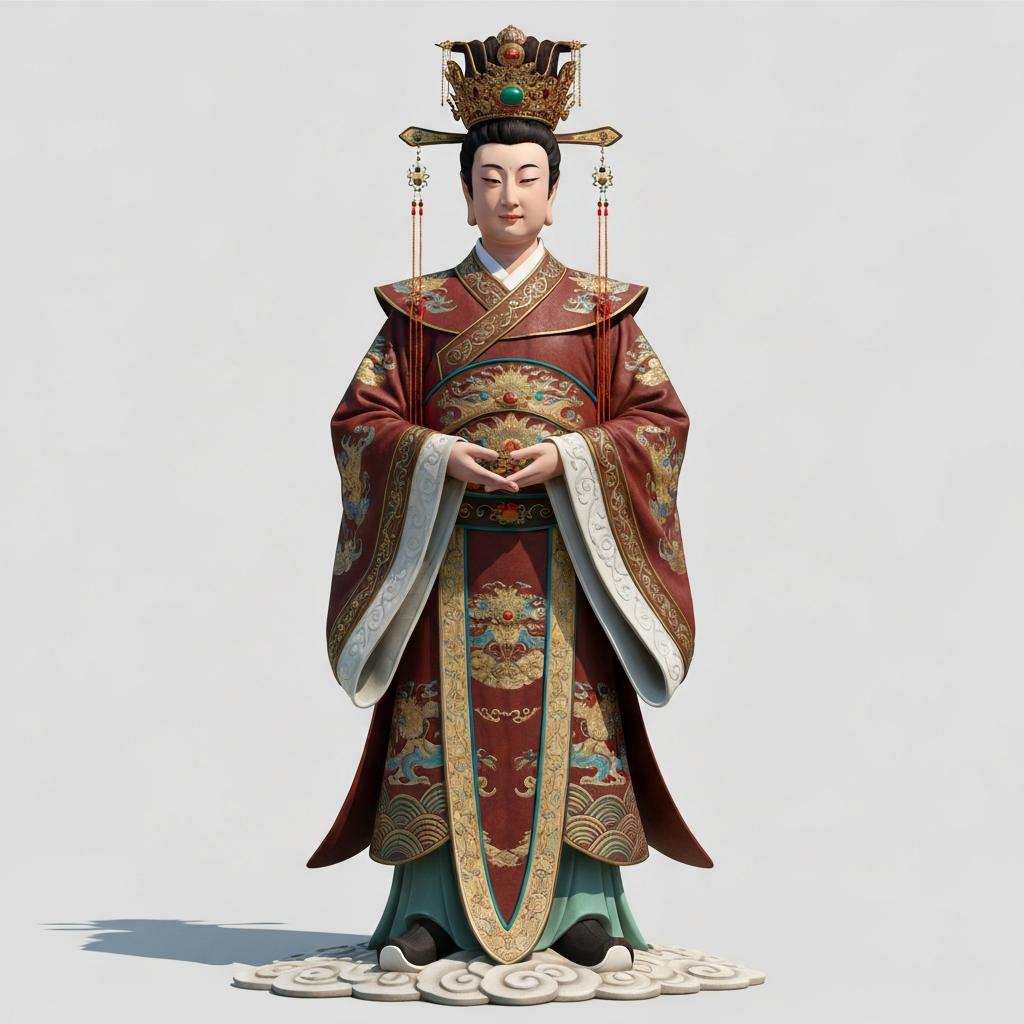
The Jade Emperor, or Yu Huang, reigns as the supreme ruler of Heaven in Chinese mythology. He is considered the first emperor of China and presides over all other deities and earthly affairs. Understanding his role is crucial to grasping the hierarchy and structure of the Chinese pantheon. He is responsible for maintaining order and justice in the universe, dispensing rewards and punishments based on individuals’ actions. His birthday is celebrated on the ninth day of the first lunar month, marking an important occasion in the Chinese calendar. Without the Jade Emperor, there would be chaos amongst the gods, and on earth.
Step 2: Recognizing Pangu (盘古) - The Creator God
Pangu is a primordial being often depicted as a hairy giant or beast, credited with creating the universe in Chinese mythology. Born from a cosmic egg, he separated the sky and the earth, and his body transformed into the various elements of the world upon his death. Grasping Pangu's story provides insight into the Chinese cosmogony, or explanation of the universe's origins. This creation myth provides a foundation for understanding the Chinese worldview and its emphasis on the interconnectedness of all things. Understanding the creation of the universe will open up other avenues of learning for Chinese deities.
Step 3: Learning About Hou Yi (后羿) - The Divine Archer
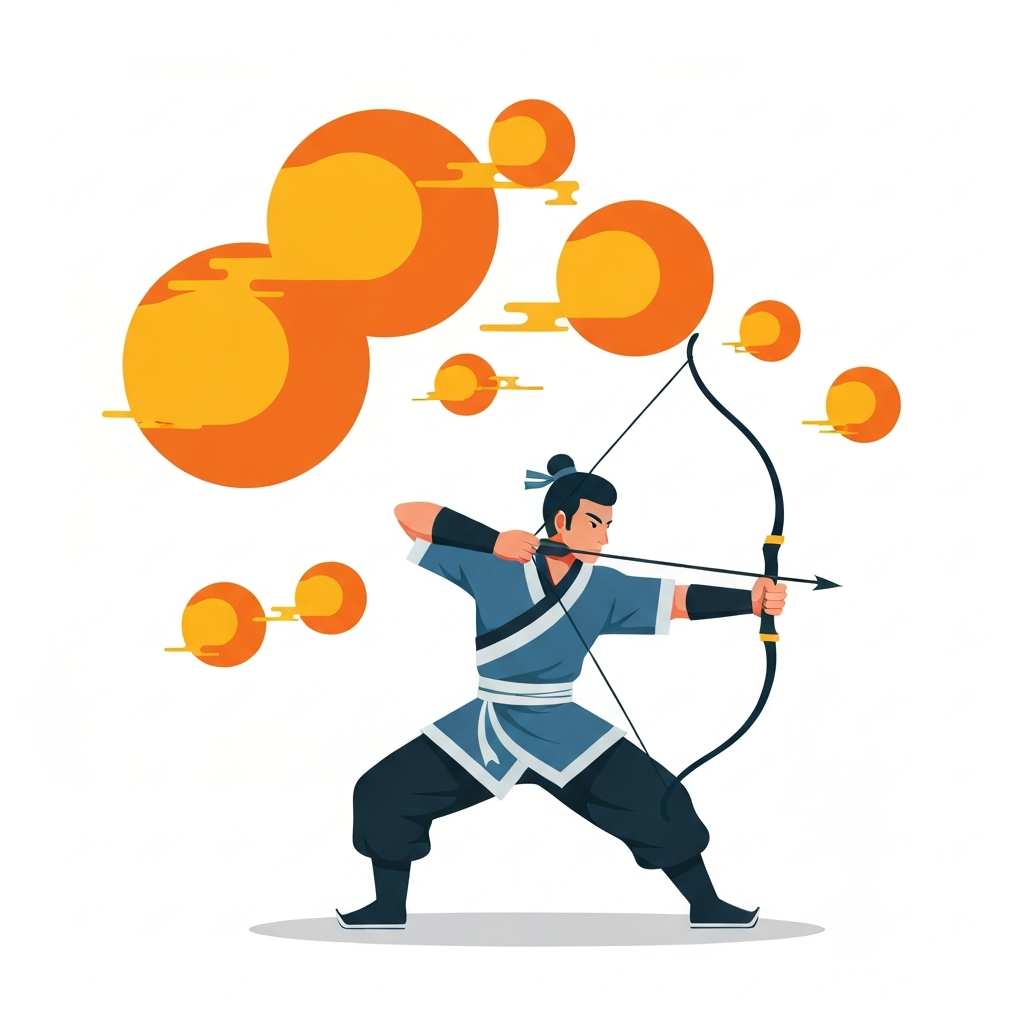
Hou Yi is a legendary archer celebrated for saving the world from the devastating heat of ten suns in Chinese mythology. With his exceptional skill, he shot down nine of the suns, restoring balance and preventing the earth from being scorched. His story is a testament to heroism and the importance of maintaining harmony. He is often paired with Chang'e, the moon goddess, in popular legends, further enriching the narrative and providing a romantic and tragic dimension to his heroic persona. His bow and arrows are crafted from mythical materials, such as dragon tendons and tiger bone, which contributes to his identity.
Step 4: Discovering Yue Lao (月老) - The God of Marriage
Yue Lao is the endearing deity of love and marriage, responsible for uniting destined couples with a magical red string. According to myth, he ties the ankles of future partners together, ensuring their eventual union. Understanding Yue Lao's role in matchmaking reveals the importance placed on relationships and fate in Chinese culture. He embodies the belief that love is preordained and that the universe plays a part in bringing people together. You can often find Yue Lao temples in China to pray for a partner.
Step 5: Exploring Xiwangmu (西王母) - The Queen Mother of the West
Xiwangmu, also known as the Queen Mother of the West, is a powerful goddess who governs life, death, creation, and destruction in Chinese mythology. She resides in a celestial palace in the Kunlun Mountains, where she cultivates the peaches of immortality. Understanding Xiwangmu's significance highlights the Chinese reverence for immortality and the cyclical nature of life. She also embodies the potential for transformation, as she was believed to once be a terrifying demon before attaining divinity. Taoists also identify her as the ancient goddess Bixia.
Step 6: Investigating Chang'e (嫦娥) - The Moon Goddess
Chang'e is the renowned goddess of the moon, celebrated in the Mid-Autumn Festival. Legend tells of her stealing an elixir of immortality from her husband, Hou Yi, leading her to ascend to the moon. Understanding Chang'e's story reveals the themes of love, sacrifice, and the pursuit of immortality in Chinese folklore. Her tale often differs depending on the version, with some portraying her as a selfless heroine and others as a more flawed figure. In some versions of the myth, Chang'e served the Jade Emperor before being condemned to live as a mortal for accidentally breaking a porcelain pot.
Step 7: Meeting the Dragon King (龙王) - Ruler of the Waters
The Dragon King, or Longwang, reigns supreme over all bodies of water, controlling the weather and commanding dragons. He is both a formidable guardian and a symbol of good fortune, embodying the concept of yang. Understanding the Dragon King's domain provides insights into the significance of water in Chinese culture and its association with power and prosperity. Coastal communities in China especially revere the Dragon King. Longwang has two forms: a zoomorphic dragon form and a warrior lord human persona. As a human, he dresses in royal robes and has blazing red skin.
Step 8: Delving into the Eight Immortals (八仙)
The Eight Immortals, collectively known as the Ba Xian, are a group of legendary heroes renowned for their pursuit of justice and wielding unique magical objects. They are Cao Guojiu, Han Xiangzi, He Xiangu, Lan Caihe, Li Tieguai, Lü Dongbin, Zhang Guolao, and Zhongli Quan, with He Xiangu being the only female. Each immortal possesses distinct powers derived from their respective objects, reflecting diverse aspects of Chinese culture and philosophy. Their stories provide moral lessons and inspire acts of kindness and courage.
Step 9: Exploring Guanyin (观音) - The Goddess of Mercy
Guanyin, the goddess of mercy, embodies compassion and serves as a beacon of hope during times of despair. She is often depicted wearing white robes and jade necklaces, symbolizing purity. Understanding Guanyin's role highlights the profound influence of Buddhism on Chinese mythology and the importance of compassion in Chinese society. She is invoked by worshippers seeking solace, guidance, and protection from suffering.
Step 10: Understanding Zao Jun (灶君) - The Kitchen God
Zao Jun, also called the Stove God, is a folk deity who resides in the hearth and monitors the household's activities. On the 23rd day of the 12th lunar month, he ascends to Heaven to report the family's conduct to the Jade Emperor. Understanding Zao Jun's role reveals the importance of family values and ethical behavior in Chinese culture. Families often make offerings to Zao Jun in hopes of receiving a favorable report, reflecting the desire for blessings and good fortune in the new year.
Common Mistakes to Avoid
- Confusing different deities with similar domains (e.g., mistaking one water god for another).
- Assuming all Chinese gods are benevolent; some can be wrathful or tricksters.
- Ignoring the regional variations in worship and mythology.
- Assuming all deities originate from the same religious tradition (Taoism, Buddhism, and folk beliefs all contribute).
Pro Tips
- Consult reputable academic sources and translations for accurate information.
- Visit Chinese temples and cultural centers to observe rituals and practices firsthand.
- Read classic Chinese literature such as "Journey to the West" and "Investiture of the Gods" for engaging narratives.
FAQ Section
- Are Chinese gods still worshipped today?
- Yes, many Chinese gods continue to be actively worshipped in temples, homes, and communities throughout China and the diaspora. Practices vary depending on region and personal belief.
- How does Chinese mythology differ from Greek mythology?
- While both are rich and complex pantheons, Chinese mythology often emphasizes harmony, cosmic balance, and ancestor veneration, whereas Greek mythology tends to focus on heroic exploits and the often-tumultuous relationships between gods and mortals.
- Where can I learn more about a specific Chinese god or goddess?
- Consult academic journals, books on Chinese mythology, and reputable websites dedicated to Asian folklore and religion. Museum collections and cultural centers also offer valuable resources.
Conclusion
Exploring the realm of Chinese myth gods is an enriching experience, offering valuable insights into the cultural values, beliefs, and worldview of Chinese civilization. From the creation of the universe to the complexities of human relationships, these deities shape the Chinese cultural identity. By understanding the stories and domains of these figures, you can deepen your appreciation for the rich tapestry of Chinese culture and its enduring legacy.