Facial hair can dramatically alter a man's appearance, projecting anything from ruggedness and wisdom to sophistication and style. Choosing the right beard style, however, isn't as simple as picking one that looks good in a picture. The ideal beard complements your face shape, reflects your personality, and suits your lifestyle. From the clean lines of a goatee to the full and commanding presence of a yeard (a beard grown for a year), the options are vast and varied.
This guide offers an in-depth look at popular beard styles, exploring their characteristics, how to achieve them, and which face shapes they best suit. We'll cover everything from the classic goatee to more contemporary styles, providing you with the knowledge you need to cultivate a beard that truly enhances your individual look. Prepare to embark on a journey of follicular exploration, and discover the power of a well-chosen beard.
Ultimately, the best beard is one that you feel confident and comfortable wearing. This guide is designed to provide the information you need to make an informed decision, allowing you to confidently grow and style a beard that suits you perfectly. Let's dive in!
Step 1: Determining Your Face Shape
Before embarking on your beard-growing journey, it's crucial to identify your face shape. Different beard styles flatter different face shapes, helping to balance proportions and highlight your best features. To determine your face shape, pull your hair back and look at your face in the mirror. Consider the overall outline: Is it round, square, oval, heart-shaped, diamond-shaped, or rectangular? Pay attention to the width of your forehead, cheekbones, and jawline, as well as the shape of your chin. You can also use a tape measure to get precise measurements, noting the widest points of your forehead, cheekbones, and jaw. Compare these measurements to the characteristics of each face shape.
Oval faces are longer than they are wide, with a forehead that is slightly wider than the jawline and a rounded chin. Round faces have similar length and width measurements, with the widest point at the cheekbones and a rounded jaw. Square faces also have similar length and width, but with a strong, angular jawline. Heart-shaped faces feature a wide forehead, high cheekbones, and a pointed chin. Diamond faces are widest at the cheekbones, with a narrower forehead and jawline. Finally, rectangular faces are longer than they are wide, with a similar width in the forehead, cheekbones, and jawline. Once you've identified your face shape, you can begin exploring beard styles that complement it.

Step 2: Exploring Beard Styles for Oval Faces
Oval faces are considered the most versatile face shape, capable of sporting a wide range of beard styles with ease. This is because the balanced proportions of an oval face provide a neutral canvas for almost any beard. Experimentation is key, but several styles tend to work particularly well. A classic, full beard adds masculinity and definition without overwhelming the face. A stubble beard, kept neatly trimmed, enhances the jawline and provides a touch of ruggedness. You can even try styles with greater volume, such as the Garibaldi, provided it is kept well-groomed and doesn't extend too far below the chin.
Consider a Chevron mustache, which will draw attention to the center of the face. Alternatively, the original mustache is a thin banner that sits on the top lip. The horseshoe mustache is thick with handlebar lines wrapping around the mouth and chin. Ultimately, the best approach is to try different styles and see what resonates with your personal aesthetic and complements your overall appearance. Don't be afraid to consult with a barber for personalized recommendations.
Step 3: Beard Styles for Round Faces
The key to styling a beard on a round face is to create the illusion of length and definition. Avoid styles that add width to the sides of the face, as these will only accentuate the roundness. Instead, opt for styles that feature more length on the chin, such as a goatee, a Van Dyke, or a Balbo beard. These styles create a vertical line that elongates the face and adds sharpness to the jawline.
The Balbo beard includes a mustache, a chin beard, and often, a soul patch in the center of the beard. The Van Dyke beard is grown with both a mustache and a goatee. A short box beard, where the hair on the chin is longer, is another good option. The anchor beard bridges together a soul patch and a petit goatee. Avoid styles like mutton chops, which add width to the sides of the face. Keep the sides of your beard trimmed close to the face to further enhance the slimming effect. Be sure to consult with a barber for personalized advice and precise trimming techniques to get the style just right.
Step 4: Beard Styles for Square Faces
Square faces are characterized by a strong, angular jawline. The goal when styling a beard on a square face is to soften these angles and add some roundness to the overall appearance. Styles that feature hair on the chin, such as a goatee, a royale beard, or a circle beard, can help to achieve this effect. These styles draw attention to the center of the face and create a more balanced look.
The royale beard is often referred to as a "floating" mustache above a goatee. The circle beard joins a mustache with a rounded goatee. Avoid styles that emphasize the angularity of the face, such as a beard with sharply defined lines or a chinstrap beard. Keep the beard length relatively short to avoid adding too much bulk to the jawline. Remember to maintain clean lines and defined edges to ensure a polished and sophisticated appearance. Regular trimming is essential to keep the beard in shape and prevent it from becoming unruly.
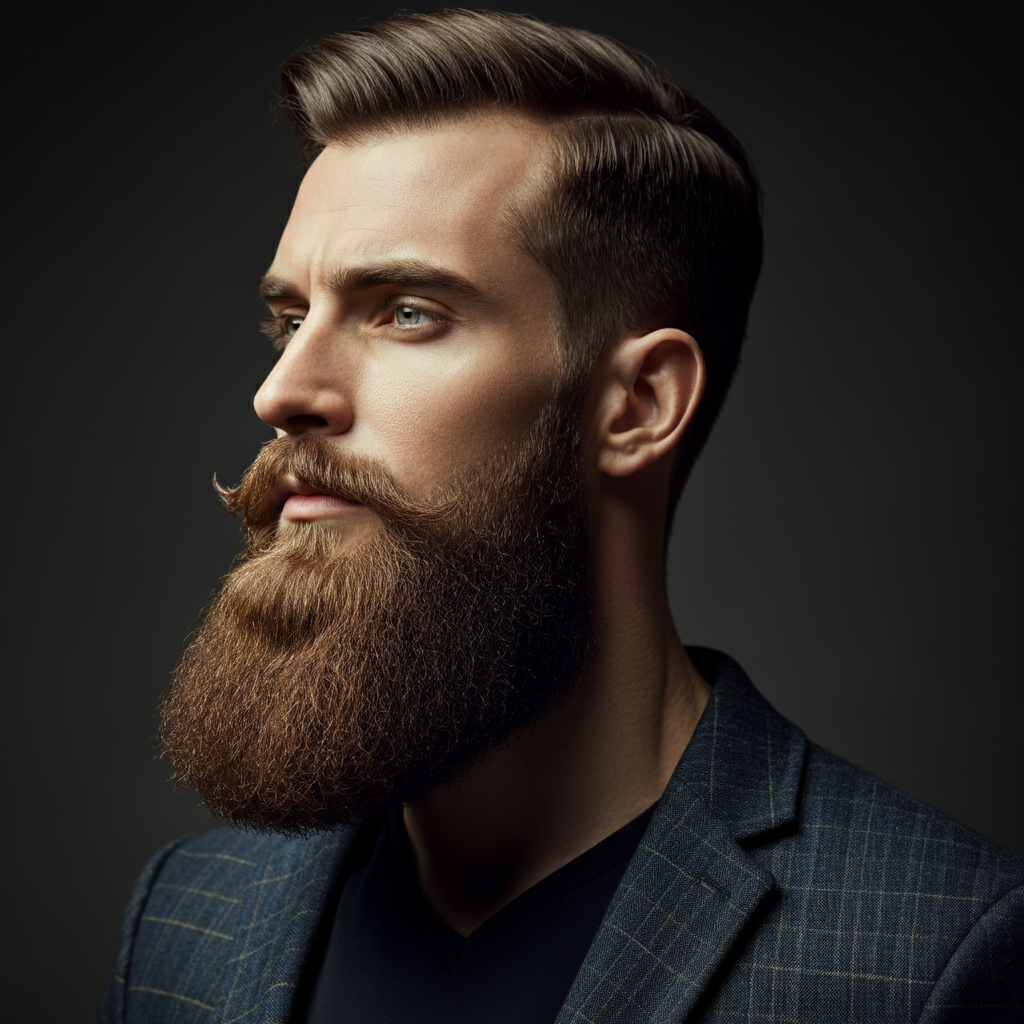
Step 5: Beard Styles for Rectangular Faces
Rectangular faces are longer than they are wide, with a similar width in the forehead, cheekbones, and jawline. The objective when styling a beard on a rectangular face is to add width and balance the proportions of the face. Styles that feature more volume on the sides of the face, such as mutton chops or a gunslinger beard and mustache, can help to achieve this effect. These styles create the illusion of width and make the face appear less elongated.
A chin strip is a tiny patch of hair just below the bottom lip. A chin strap lines the length of the entire jaw with no sideburns or mustache. Avoid styles that add length to the chin, such as a long goatee, as these will only accentuate the vertical length of the face. Keep the beard relatively short to avoid adding too much bulk. Careful grooming and maintenance are crucial to prevent the beard from looking unkempt or disproportionate.

Step 6: Beard Styles for Heart-Shaped Faces
Heart-shaped faces feature a wide forehead, high cheekbones, and a pointed chin. The aim when styling a beard on a heart-shaped face is to add width to the jawline and balance the proportions of the face. Styles that feature fullness around the chin and jawline, such as a full beard or a beard with significant volume in the lower portion, can help to achieve this effect.
Consider styles with a natural, untamed look, allowing the beard to grow freely around the chin and jawline. Avoid styles that are too sharply defined or heavily trimmed, as these can accentuate the narrowness of the chin. A well-maintained stubble beard can also work well, adding subtle definition to the jawline without overwhelming the face. Experiment with different lengths and styles to find what best complements your unique facial features.
Step 7: Beard Styles for Diamond Faces
Diamond faces are widest at the cheekbones, with a narrower forehead and jawline. The goal when styling a beard on a diamond face is to add fullness to the forehead and jawline, creating a more balanced overall shape. Styles that feature a fuller beard on the sides of the face can help to achieve this effect.
A well-groomed goatee, petit goatee, or anchor beard will also work well. Avoid styles that are too narrow or sharply defined, as these will accentuate the angularity of the face. A slightly longer beard length can add volume and dimension to the lower portion of the face, helping to create a more balanced and harmonious appearance. Experiment with different styles to find what best complements your specific facial features and enhances your overall look.
Tools or Materials Required
- Beard Trimmer: Essential for maintaining beard length and creating defined lines.
- Scissors: For trimming stray hairs and shaping the beard with precision.
- Beard Comb or Brush: To detangle and style the beard, distributing natural oils.
- Beard Oil: To moisturize the beard and skin, preventing dryness and itchiness.
- Beard Balm: To provide hold and control, shaping the beard and taming flyaways.
- Shaving Cream or Gel: For clean shaves around the beard edges.
- Aftershave Balm: To soothe the skin after shaving.
Common Mistakes to Avoid
- Ignoring Your Face Shape: Choosing a beard style that doesn't complement your face shape can lead to an unbalanced or unflattering look.
- Neglecting Maintenance: Failing to trim, wash, and oil your beard regularly can result in an unkempt and itchy appearance.
- Over-Trimming: Trimming too much hair can lead to unevenness or a style that doesn't suit your face.
- Using Harsh Shampoos: Using regular shampoos can strip the beard of its natural oils, causing dryness and damage.
- Ignoring the Neckline: Neglecting to define the neckline can result in an untidy and unprofessional look.
Pro Tips
- Invest in high-quality grooming tools for precise trimming and styling.
- Use beard oil regularly to keep your beard moisturized and healthy.
- Trim your beard when it's dry for more accurate results.
- Experiment with different styles to find what works best for you.
- Consult with a barber for personalized advice and professional grooming.
FAQ Section
- How often should I trim my beard?
Trim your beard every 1-2 weeks to maintain its shape and length. - How do I prevent beard itch?
Use beard oil regularly to moisturize the skin and prevent dryness. - How do I choose the right beard style for my face shape?
Refer to the guidelines outlined in this article, and consult with a barber for personalized recommendations. - Can I grow a beard if I have patchy growth?
Yes, there are styles that can work with patchy growth, such as a goatee or stubble beard.
Conclusion
Choosing the right beard style is a personal journey that depends on various factors, most importantly your face shape and personal preferences. By understanding the characteristics of different beard styles and how they complement different face shapes, you can confidently cultivate a beard that enhances your appearance and reflects your individual style. Remember to invest in quality grooming tools, maintain your beard regularly, and don't be afraid to experiment. With the right knowledge and a little patience, you can achieve the perfect beard for you.