Choosing the right food for your beloved pet is a crucial decision that directly impacts their health, vitality, and overall well-being. However, navigating the seemingly endless options and deciphering the often-complex language on pet food labels can feel overwhelming. Many pet owners rely on clever marketing or attractive packaging, but a truly informed decision requires understanding the key components of the label itself.
This comprehensive guide provides a step-by-step approach to reading and interpreting pet food labels, empowering you to make the best possible choice for your furry friend. We'll break down the ingredient list, analyze the guaranteed analysis, and demystify common marketing claims. By the end of this guide, you'll possess the knowledge to confidently select a pet food that meets your pet's specific nutritional needs.
Remember, a healthy pet starts with a healthy diet. Let's dive in and learn how to become a savvy pet food shopper!
Step 1: Decoding the Ingredient List
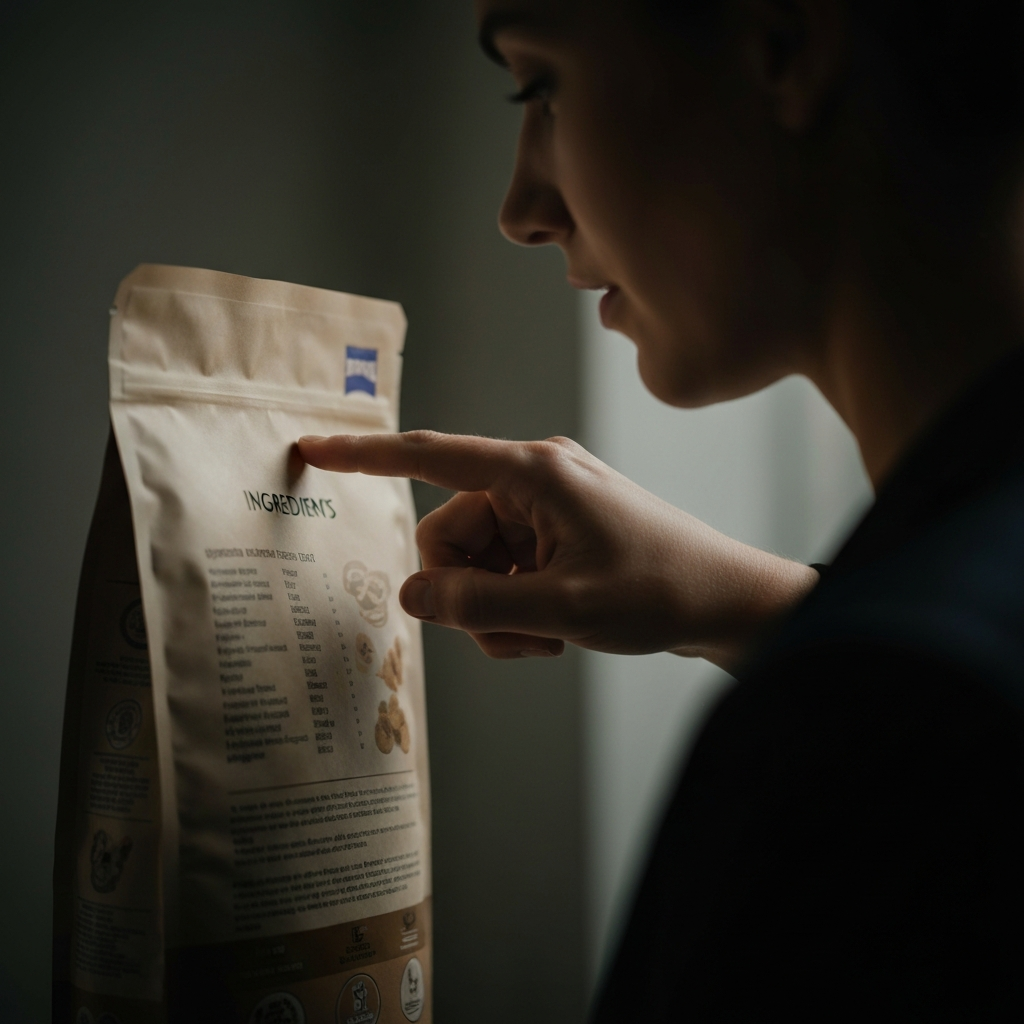
The ingredient list is arguably the most important part of a pet food label. Regulations require manufacturers to list ingredients in descending order by weight. This means the first few ingredients make up the bulk of the food. Ideally, the top ingredients should be recognizable and nutritious, such as meat, poultry, or fish. Pay close attention to the source and quality of these protein sources.
Practical Details & Considerations
Don't be alarmed if you see "meal" listed. Meat meal or poultry meal simply means the meat or poultry has been rendered, which is a process of cooking and grinding to remove water and fat. This results in a concentrated source of protein. Also, be aware that ingredients are listed by weight before cooking. Fresh meat contains a lot of water, so even if it's listed first, the total amount of *dry* meat might be less than, say, a meat meal listed second.
Step 2: Understanding Meat vs. Meat By-Products
It's important to distinguish between "meat" and "meat by-products." "Meat" generally refers to the muscle tissue of animals, while "meat by-products" include organs, bones, and other parts not typically consumed by humans. While some pet owners are wary of by-products, they can be a valuable source of nutrients. For instance, liver is rich in vitamins and minerals. The key is to ensure these by-products come from a reputable source.

Practical Details & Considerations
Look for "named" by-products. For example, "chicken liver" is preferable to simply "poultry by-products" because it specifies the source. Unnamed by-products can be less predictable in their nutritional content. Also, consider your pet's specific needs. Some pets with allergies or sensitivities may do better on diets that avoid by-products altogether.
Step 3: Recognizing Other Key Ingredients
Beyond meat and meat by-products, pet food often contains grains, vegetables, and fruits. These ingredients provide carbohydrates, fiber, vitamins, and minerals. Common examples include corn, rice, barley, potatoes, carrots, and blueberries. While some diets are grain-free, grains can be a perfectly acceptable source of energy for many pets. The digestibility and quality of these ingredients are more important than whether or not they are grains. Added vitamins and minerals are essential to complete the nutritional profile.

Practical Details & Considerations
Be wary of excessive fillers or ingredients that are primarily used to add bulk without providing significant nutritional value. Watch out for generic terms like "plant protein products" without specifying the source. Also, pay attention to the order in which these ingredients appear. A food with a long list of grains and vegetables before any meat source might not be ideal for a carnivore.
Step 4: Interpreting the Guaranteed Analysis
The guaranteed analysis provides a breakdown of the food's nutrient composition, including the minimum percentages of crude protein and crude fat, and the maximum percentages of crude fiber and moisture. This information allows you to compare the nutritional content of different foods. However, it's important to remember that these are minimum and maximum values, not exact amounts.

Practical Details & Considerations
The guaranteed analysis doesn't tell the whole story. Protein source matters (animal vs. plant), and the digestibility of the ingredients will affect how well your pet absorbs the nutrients. Also, be sure to compare foods on a dry matter basis, especially when comparing wet and dry foods. Wet food has a much higher moisture content, which will skew the percentages.
Step 5: Understanding "As Fed" vs. "Dry Matter" Basis
Pet food labels present nutrient information on an "as fed" basis, meaning as the food is packaged. However, comparing foods with different moisture levels can be misleading. To accurately compare nutrient levels, you need to calculate the "dry matter" basis. This involves removing the moisture content to see the nutrient concentrations on a dry weight basis. To convert to dry matter, subtract the percentage of moisture from 100%. Then divide the percentage of the nutrient you are interested in (e.g. protein) by the dry matter percentage, and multiply by 100.

Example Calculation
For example, consider a wet food with 8% protein and 75% moisture. The dry matter is 100 - 75 = 25%. Therefore, the protein on a dry matter basis is (8/25) * 100 = 32%.
Step 6: Deciphering Marketing Claims
Pet food labels are often filled with marketing claims like "natural," "premium," or "grain-free." While these terms might sound appealing, they don't always have strict legal definitions. Be cautious of relying solely on these claims and focus on the actual ingredients and nutritional analysis.
Practical Details & Considerations
"Natural" generally means that no artificial flavors, colors, or preservatives have been added. However, the term doesn't necessarily imply higher quality or better nutrition. "Grain-free" simply means that the food doesn't contain common grains like corn, wheat, or soy. However, it may contain other carbohydrates, such as potatoes or peas. "Premium" has no legal definition and is simply a marketing term. Look for the AAFCO statement, as it is the most important aspect in the label.
Step 7: Locating the AAFCO Statement
The AAFCO (Association of American Feed Control Officials) statement is a crucial indicator of a food's nutritional adequacy. This statement confirms that the food meets the nutritional levels established by AAFCO for a specific life stage (e.g., growth, maintenance, all life stages). Look for this statement near the guaranteed analysis.

Practical Details & Considerations
The AAFCO statement will specify whether the food is "formulated to meet" or "has been substantiated by feeding trials." Foods that have undergone feeding trials provide a higher level of assurance that they are nutritionally adequate. If a food doesn't have an AAFCO statement, it may not be a complete and balanced diet.
FAQ Section
Q: What if my pet has allergies?
A: Carefully read the ingredient list to identify and avoid potential allergens. Common allergens include beef, chicken, dairy, wheat, and soy. Consider a limited-ingredient diet with a novel protein source (e.g., duck, venison) to minimize the risk of allergic reactions.
Q: Should I choose wet or dry food?
A: Both wet and dry foods can be nutritious options. Wet food has a higher moisture content, which can be beneficial for hydration. Dry food is generally more affordable and convenient to store. Choose the food type that best suits your pet's individual needs and preferences.
Q: How important is the price of the food?
A: While price isn't always an indicator of quality, cheaper foods often use lower-quality ingredients and may not be as nutritionally complete. Investing in a high-quality food can potentially save you money in the long run by reducing the risk of health problems.
Conclusion
Reading a pet food label doesn't have to be a daunting task. By understanding the key components of the label, you can make informed decisions that support your pet's health and well-being. Remember to prioritize the ingredient list, analyze the guaranteed analysis, and be skeptical of marketing claims. Consult with your veterinarian for personalized recommendations based on your pet's individual needs. By taking the time to educate yourself, you can provide your furry friend with the nutrition they deserve.