Spotting a squat is a crucial skill for anyone involved in weightlifting, whether you're a seasoned powerlifter or a beginner just starting out. A good spotter can provide the confidence and safety needed to push your limits, while an inexperienced one can be a liability. This guide will equip you with the knowledge and techniques necessary to effectively spot squats, ensuring the safety and success of both the lifter and yourself.
Beyond simply preventing injuries, effective spotting allows the lifter to focus entirely on their form and strength output. Knowing that a reliable spotter is present can significantly reduce anxiety and increase the lifter's ability to push through challenging repetitions. Proper communication and a pre-established understanding of the lifter's goals and limits are paramount for a successful spotting experience.
This comprehensive guide covers everything from proper positioning and hand placement to communication strategies and bailout procedures. We will explore spotting techniques for both single and multiple spotters, ensuring you're prepared to assist lifters of all levels and abilities. Prepare to elevate your spotting game and become a trusted partner in the pursuit of strength.
Step 1: Pre-Lift Communication and Assessment
Before the lifter even approaches the barbell, a conversation is essential. Discuss the planned set – the number of repetitions, the target weight, and any specific concerns the lifter may have. Inquire about their experience level and previous lifting history. Understanding the lifter's expectations is crucial for providing appropriate support. Ask about any previous injuries or limitations that might affect their squat form or require special spotting considerations. This conversation will help you anticipate potential issues and tailor your spotting technique accordingly.

Step 2: Proper Positioning and Stance (Single Spotter)
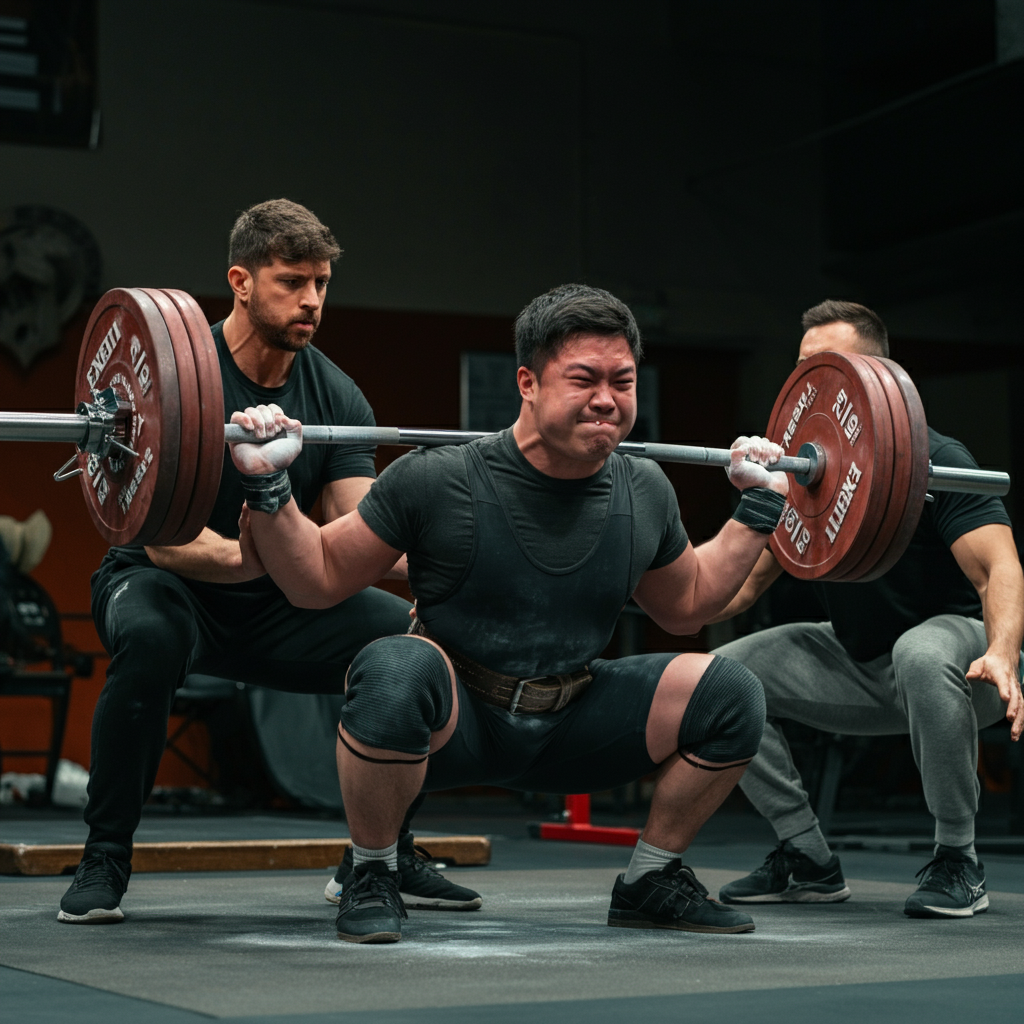
Position yourself directly behind the lifter, ensuring you have a clear view of their torso and the barbell. Your stance should be wide and stable, with your feet slightly wider than shoulder-width apart. Alternatively, a staggered stance with one foot slightly ahead of the other can provide additional stability. Maintain a slight bend in your knees to allow for quick adjustments and reactions. Ensure you are close enough to the lifter that your forearms are positioned comfortably under their armpits, but not so close that your bodies are touching. Maintain this position throughout the squat to be ready to assist.
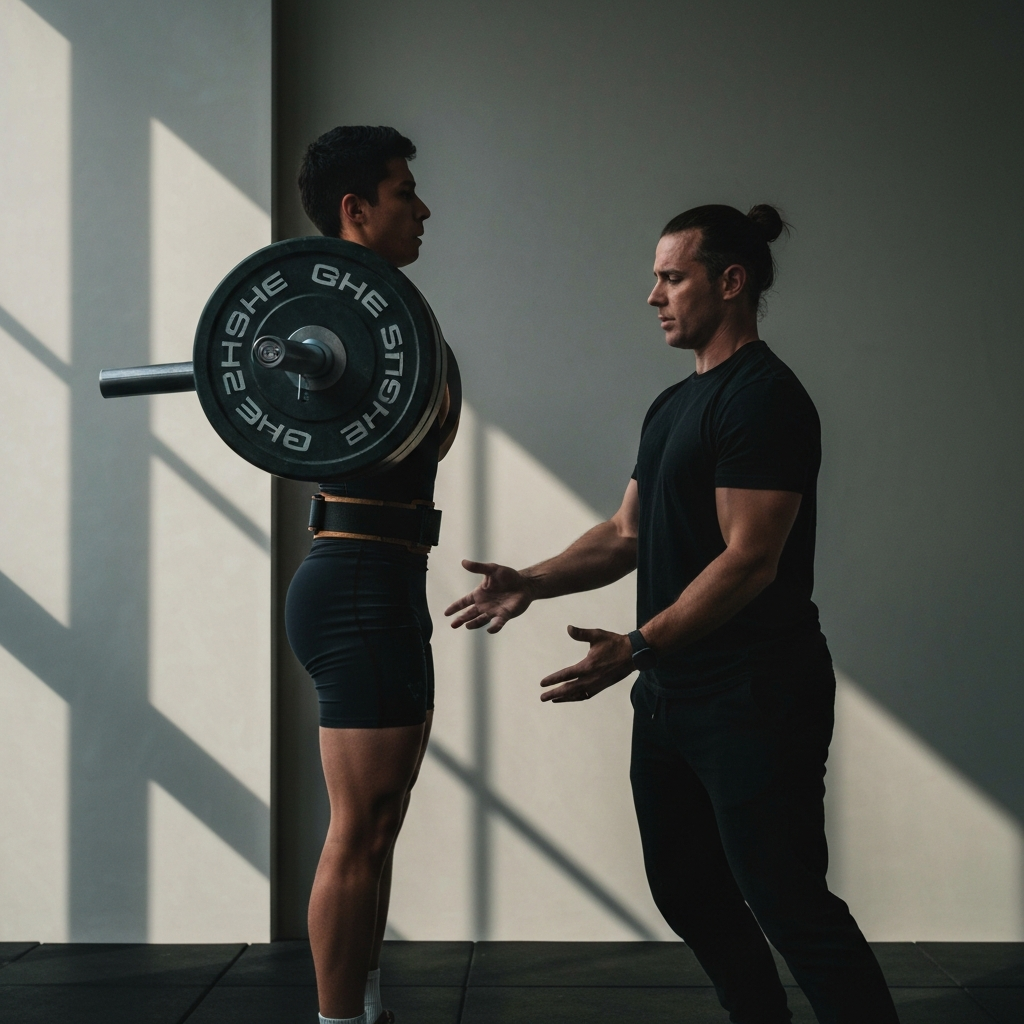
Step 3: Hand Placement and Arm Positioning (Single Spotter)
Keep your arms raised and positioned under the lifter’s armpits. Your hands can be open or closed, but avoid placing them directly on the barbell. The goal is to provide support to the lifter’s torso, not to bear the weight of the bar. Some spotters prefer closed fists, especially when spotting female lifters, to minimize physical contact. The key is to maintain a consistent arm position throughout the squat, avoiding any sudden movements that could disrupt the lifter's balance or concentration. Be ready to react if the lifter struggles, wrapping your arms around their torso to provide upward support.
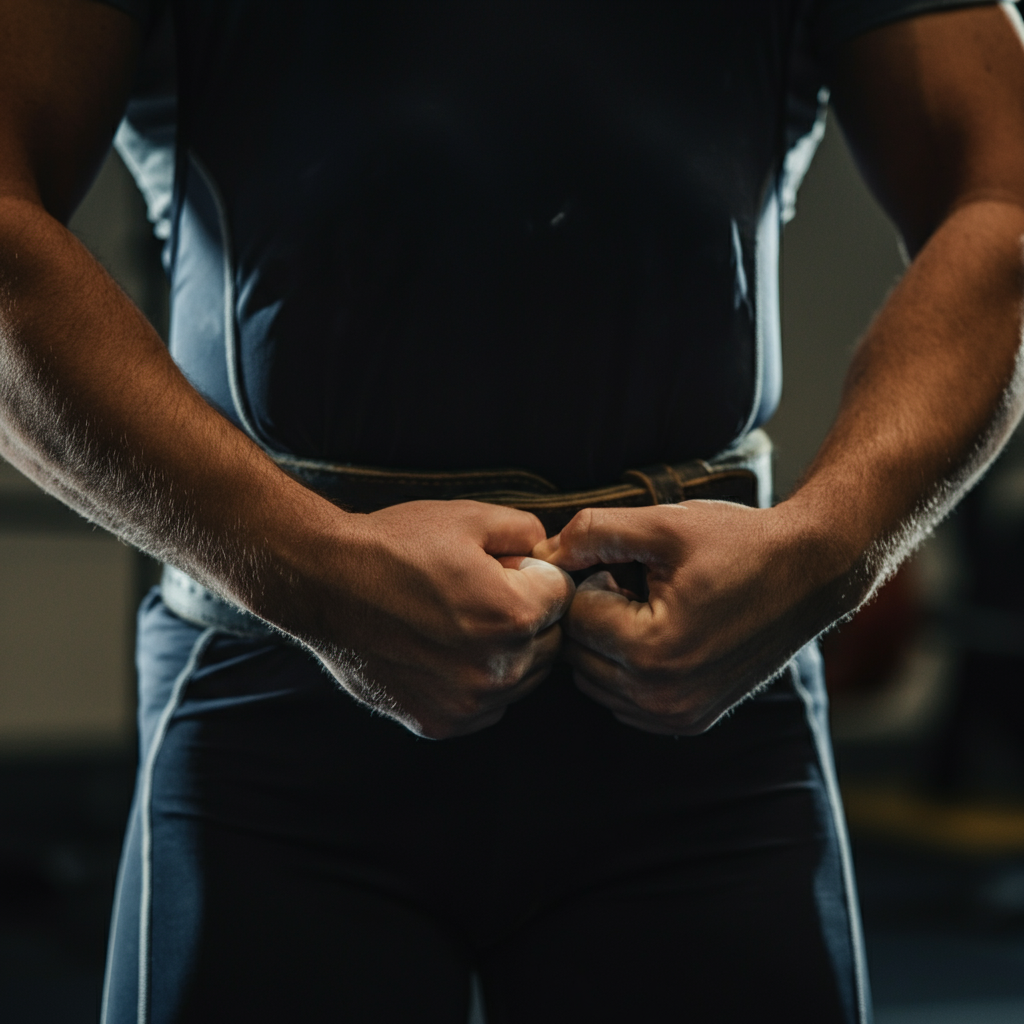
Step 4: Moving in Sync with the Lifter
As the lifter begins their descent, mirror their movement by squatting down in unison. Maintain the same pace and depth as the lifter, keeping your body aligned with theirs. This allows you to stay in optimal position to provide assistance if needed. Pay close attention to the lifter’s form, especially during the ascent, as this is often the point where they are most likely to struggle. By mirroring their movement, you can anticipate potential difficulties and react quickly to provide support.
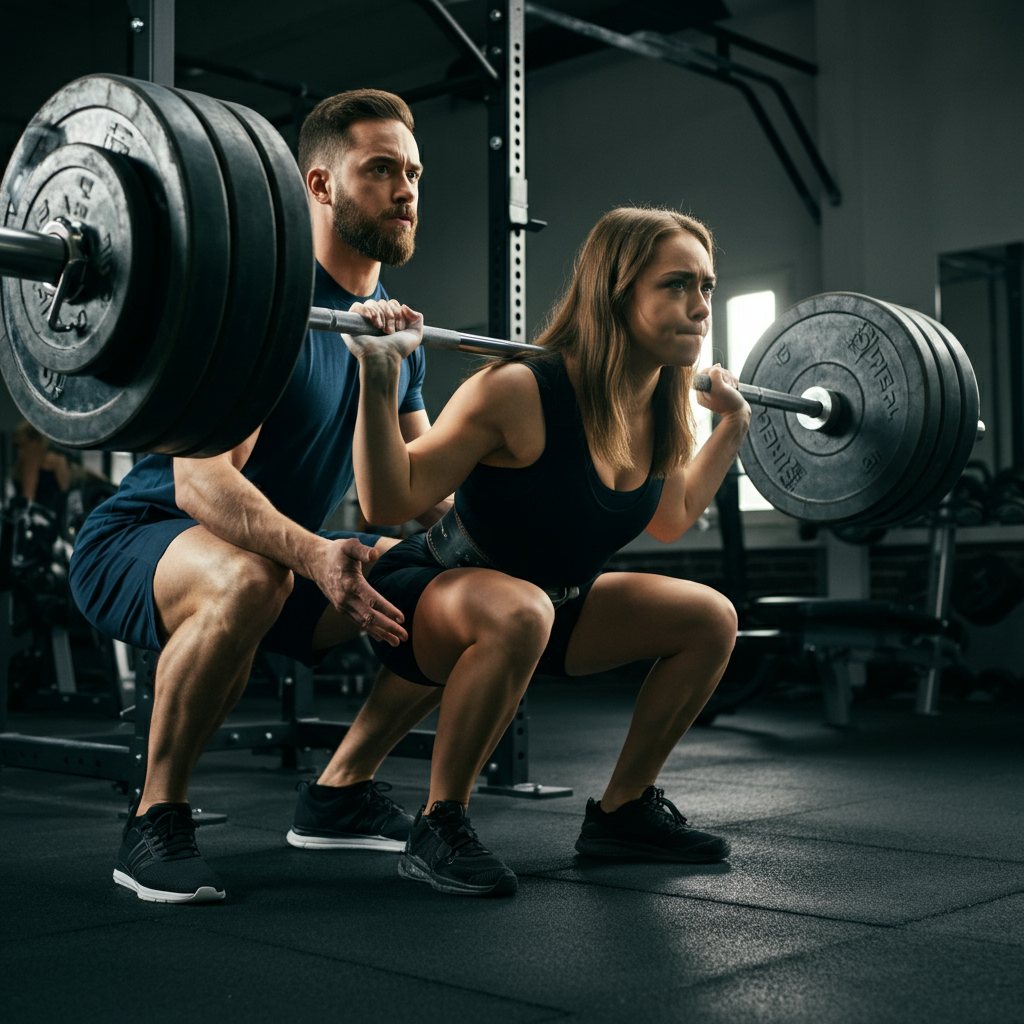
Step 5: Providing Assistance When Needed
The moment the lifter starts to struggle, engage your arms to provide assistance. Wrap your arms firmly around their torso, using your legs to generate upward force. Avoid yanking or jerking the lifter upwards; instead, provide smooth, controlled support. Communicate with the lifter as you assist them, offering words of encouragement and guidance. If the lifter is unable to complete the rep, help them safely return the barbell to the rack, maintaining control of the weight throughout the process.

Step 6: Re-Racking the Weight Safely
Once the lifter has completed their set (or failed a rep), assist them in safely re-racking the weight. Walk with them towards the rack, maintaining a firm grip on their torso if necessary. Ensure that the barbell is securely positioned on the rack before releasing your hold. This is a crucial step to prevent accidents and injuries. Once the weight is safely racked, offer words of encouragement and congratulations to the lifter, regardless of whether they succeeded or failed.
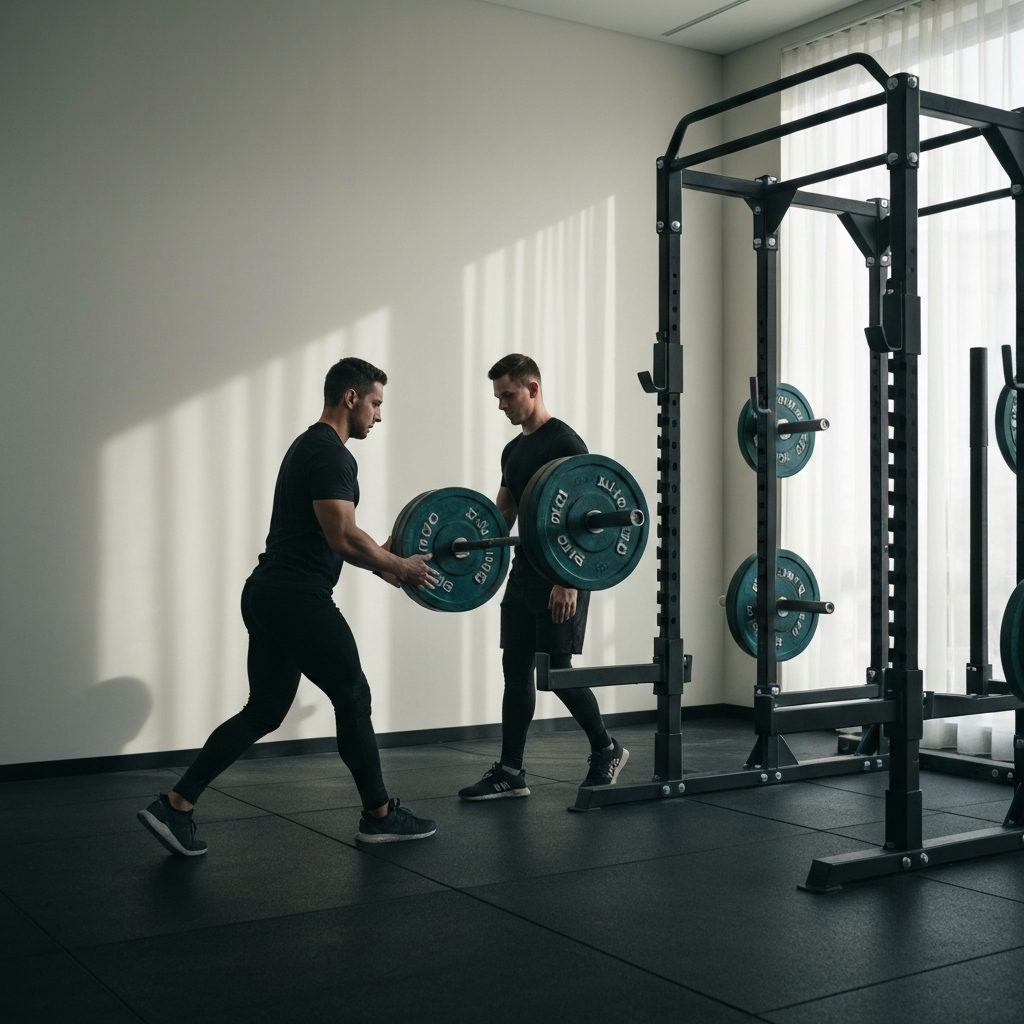
Step 7: Spotting with Multiple Spotters
When spotting with multiple spotters (typically two or three), the responsibilities are divided. Two spotters stand on either side of the barbell, with their hands cupped underneath, ready to assist if the barbell tilts or begins to fall. A third spotter stands behind the lifter, acting as the primary spotter and following the same techniques as a single spotter. The primary spotter is typically responsible for communicating with the side spotters and signaling when they need to assist.
Safety Considerations
Always prioritize safety above all else. Never attempt to spot a weight that you are not comfortable handling. If you are unsure of your ability to provide adequate support, politely decline the request. Communicate clearly with the lifter about the bailout plan and ensure that both of you understand the procedure. Be aware of your surroundings and ensure that the area is clear of any potential hazards. By following these safety guidelines, you can help prevent accidents and injuries.
Common Mistakes to Avoid
- Failing to communicate with the lifter beforehand.
- Positioning yourself too far away from the lifter.
- Attempting to catch the barbell instead of supporting the lifter.
- Yanking or jerking the lifter upwards.
- Losing focus or becoming distracted during the lift.
Pro Tips
- Use a spotter even when you feel confident, especially when pushing your limits.
- Establish clear communication signals for when the lifter needs assistance and when they need to bail out.
- Maintain eye contact with the lifter throughout the set to anticipate their needs.
- Practice spotting with lighter weights to develop your technique and coordination.
- Remember, your role is to assist, not to perform the lift for the lifter.
FAQ Section
Q: Do I need to be stronger than the person I'm spotting?
A: No, the lifter should maintain primary control over the weight. Your job is to assist and provide support.
Q: What if I'm spotting a female lifter?
A: The technique is the same, but be mindful of personal space. Consider using closed fists instead of open hands.
Q: What should I do if the lifter drops the weight unexpectedly?
A: Your primary focus should be on protecting the lifter. Move out of the way if necessary and allow the weight to fall.
Conclusion
Mastering the art of spotting squats is a valuable skill that can benefit both the lifter and the spotter. By following the techniques outlined in this guide, you can provide a safe and supportive environment for lifters to push their limits and achieve their strength goals. Remember that communication, proper positioning, and attentiveness are key to effective spotting. Always prioritize safety and be prepared to react quickly and decisively when assistance is needed. With practice and dedication, you can become a trusted and reliable spotter in the weightlifting community.