Taekwondo, the Korean art of self-defense, is more than just kicking and punching; it's a discipline that cultivates physical and mental strength. Translating to "the way of the hand and foot," Taekwondo emphasizes powerful kicking techniques, precise strikes, and unwavering focus. This guide is designed to provide a foundational understanding of Taekwondo, allowing you to explore its core principles and begin your journey with confidence.
Starting with stances and balance, we'll delve into fundamental kicks, punches, and blocks. Mastering these basics is crucial before advancing to more complex techniques. Remember, consistency and patience are key to progress in Taekwondo. This guide will provide the framework for your learning, but supplementing it with instruction from a qualified Taekwondo instructor is highly recommended.
Whether you are interested in learning self-defense, improving your fitness, or exploring a new martial art, Taekwondo offers a rewarding path of personal growth. Let's begin!
Step 1: Mastering the Attention Stance
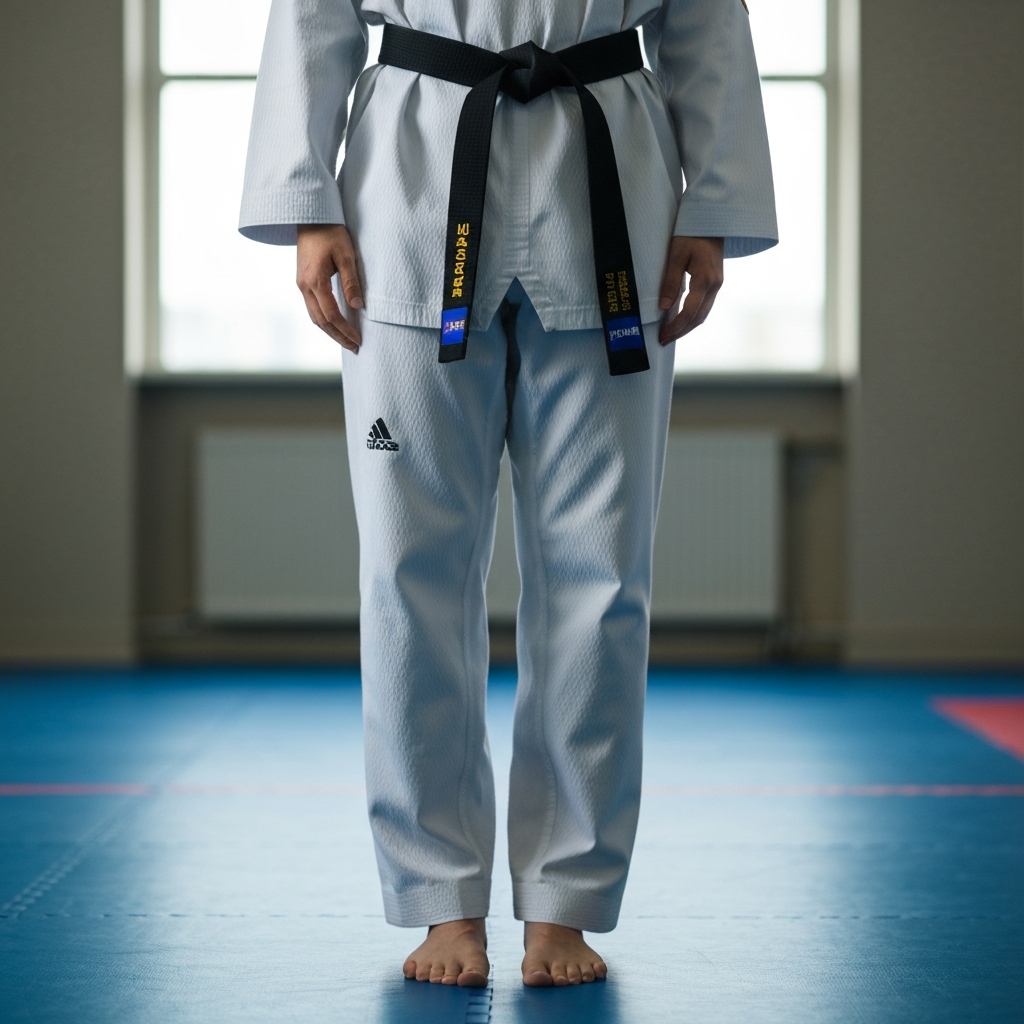
The attention stance, or "Charyeot" in Korean, is the foundational posture in Taekwondo. It signifies respect, readiness, and disciplined focus. To execute this stance, stand tall with your feet together, toes pointing forward. Your arms should be relaxed and at your sides, with your hands slightly cupped. Maintain a straight back and look directly ahead. Distribute your weight evenly between both feet to maintain stability.
Step 2: Adopting the Ready Stance
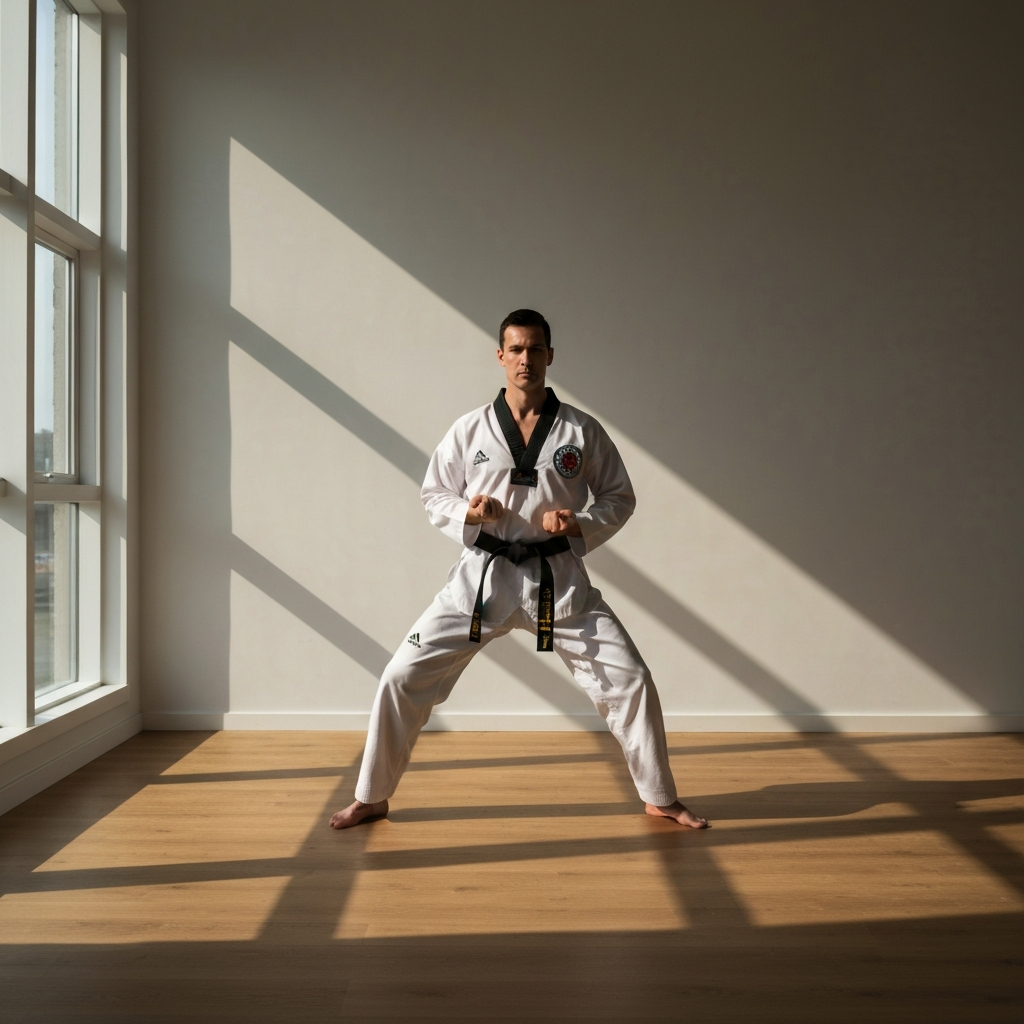
The ready stance, or "Junbi Jase" in Korean, is your starting point for most Taekwondo techniques. It provides balance, mobility, and allows for quick offensive or defensive maneuvers. Begin by standing in the attention stance. Then, step your left foot out to the side, creating a stance that's approximately shoulder-width apart. Slightly bend your knees, maintaining a comfortable and balanced posture. Bring your hands up and form fists, positioning them just below your waist, palms facing inwards. Keep your elbows slightly bent to allow for a faster reaction time.
Step 3: Enhancing Balance with Drills
Balance is paramount in Taekwondo. A strong foundation allows you to execute techniques with power, precision, and control. Incorporate balance exercises into your training routine to improve your stability and coordination. Try balancing on one leg for 30 seconds, alternating legs. To increase the difficulty, extend your arms to the sides or close your eyes. Regularly practicing balance exercises translates to improved control and reduced risk of injury during training.

Step 4: Executing the Front Kick (Ap Chagi)
The front kick, or "Ap Chagi" in Korean, is a fundamental kicking technique that targets the opponent's torso or head. Begin in a fighting stance. Lift your kicking knee high, bringing it towards your chest. Extend your leg forward, snapping your foot out towards the target, aiming with the ball of your foot. Exhale sharply as you extend your leg to generate power. Quickly retract your leg and return to your starting position. Practice this kick slowly at first, focusing on proper form and technique before increasing speed and power.

Step 5: Mastering the Roundhouse Kick (Dollyo Chagi)
The roundhouse kick, or "Dollyo Chagi," is a versatile and powerful technique used to strike the opponent's side or head. Start in your fighting stance. Bring your kicking knee up and across your body towards the opposite shoulder. Pivot on your supporting foot, turning your hip into the kick. Extend your leg outwards, snapping your foot into the target with the instep or ball of your foot. The pivot is crucial for generating power and maximizing the reach of the kick. Retract the leg and return to your starting position.

Step 6: Delivering the Standard Punch (Jireugi)
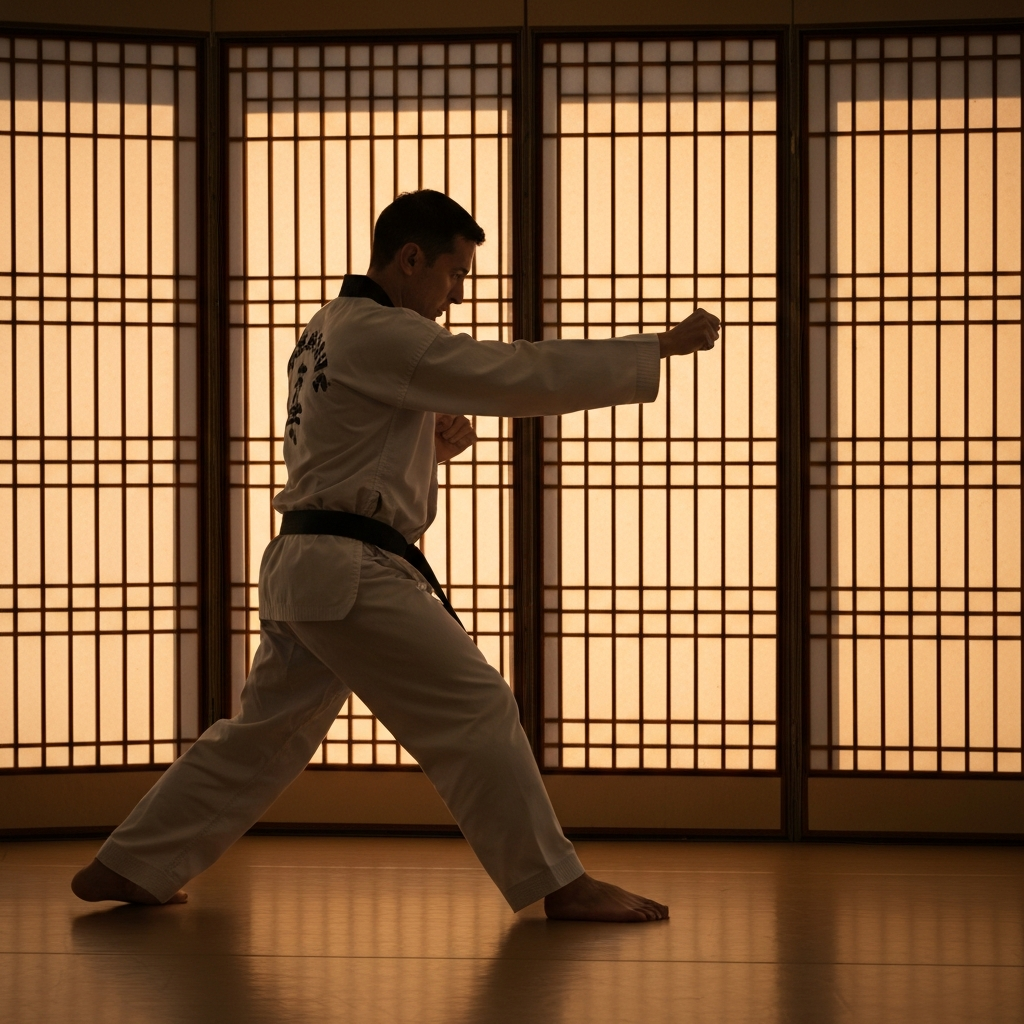
The standard punch, or "Jireugi," is a fundamental striking technique that targets the opponent's torso or face. From your fighting stance, make a tight fist. Rotate your fist as you extend your arm forward, aiming for the solar plexus or chest. Keep your elbow slightly bent to prevent hyperextension. Simultaneously, pull your other hand back to your side to generate additional power and maintain balance. Practice delivering punches with speed and accuracy.

Step 7: Understanding Basic Blocking Techniques
Blocking is essential for defense in Taekwondo. It protects your body from incoming strikes and allows you to create opportunities for counter-attacks. One basic block is the low block ("Arae Makgi"), which defends against attacks to the lower body. To perform this, bring your arm down and across your body in a sweeping motion, deflecting the incoming strike. Another basic block is the high block ("Olgul Makgi"), used to defend against head-level attacks. Raise your forearm above your head, deflecting the incoming strike outwards. Focus on proper form and timing to effectively block attacks.
Safety Considerations
Prioritize safety during your Taekwondo training. Always warm up your muscles with light cardio and stretching before starting any techniques. Wear appropriate clothing that allows for freedom of movement. Listen to your body and avoid pushing yourself beyond your limits, especially when starting. If you experience any pain, stop immediately and rest. Training under the guidance of a qualified instructor is highly recommended to ensure proper technique and minimize the risk of injury.
Common Mistakes to Avoid
Beginners often make several common mistakes in Taekwondo. One common mistake is improper stance. Ensure your feet are properly positioned and your weight is distributed evenly. Another mistake is failing to fully extend kicks or punches. Strive for full extension to maximize power and reach. Rushing through techniques is another frequent error. Focus on proper form and technique before increasing speed and power. Correct these mistakes early to develop a solid foundation in Taekwondo.
Pro Tips
To accelerate your progress in Taekwondo, consider these pro tips. Practice regularly, even if it's just for a few minutes each day. Visualize techniques in your mind to improve your mental focus and coordination. Seek feedback from experienced practitioners and instructors to identify areas for improvement. Be patient and persistent. Progress in Taekwondo takes time and dedication. Supplement your Taekwondo training with exercises that improve your strength, flexibility, and cardiovascular fitness.
FAQ Section
Q: How often should I practice Taekwondo?
A: Aim for at least 2-3 sessions per week. Consistency is key to progress.
Q: Do I need special equipment to start Taekwondo?
A: Initially, comfortable athletic clothing is sufficient. As you progress, you may need a uniform (dobok) and protective gear.
Q: How long does it take to earn a black belt in Taekwondo?
A: It typically takes 3-5 years of consistent training to achieve a black belt.
Conclusion
Congratulations on taking your first steps in learning Taekwondo! Mastering the basics – stances, kicks, punches, and blocks – is crucial for building a solid foundation. Remember to prioritize safety, practice consistently, and seek guidance from qualified instructors. Taekwondo is a journey of self-improvement that requires dedication and perseverance. Embrace the challenge, and enjoy the rewarding path of physical and mental development that Taekwondo offers.