A flapping tarp can be a major nuisance, whether you're securing cargo on a truck bed or creating a shelter in the great outdoors. The constant noise and potential for damage can quickly turn a peaceful situation into a frustrating one. More than just an annoyance, a flapping tarp on a vehicle can increase drag, reducing fuel efficiency and even posing a safety hazard to other drivers. For campers, a flapping tarp can mean a sleepless night and compromised protection from the elements.
Fortunately, there are several proven methods to effectively minimize or eliminate tarp flapping. These techniques range from proper tarping procedures to smart anchoring strategies, depending on the application. This guide will provide step-by-step instructions and expert tips to help you secure your tarp with confidence, ensuring a quiet and secure experience, regardless of the conditions.
This guide offers solutions for both securing tarps on trucks and for camping setups. We'll cover everything from choosing the right materials to employing effective tying and anchoring techniques. By following these guidelines, you'll be well-equipped to handle any situation where a flapping tarp threatens to ruin your day.
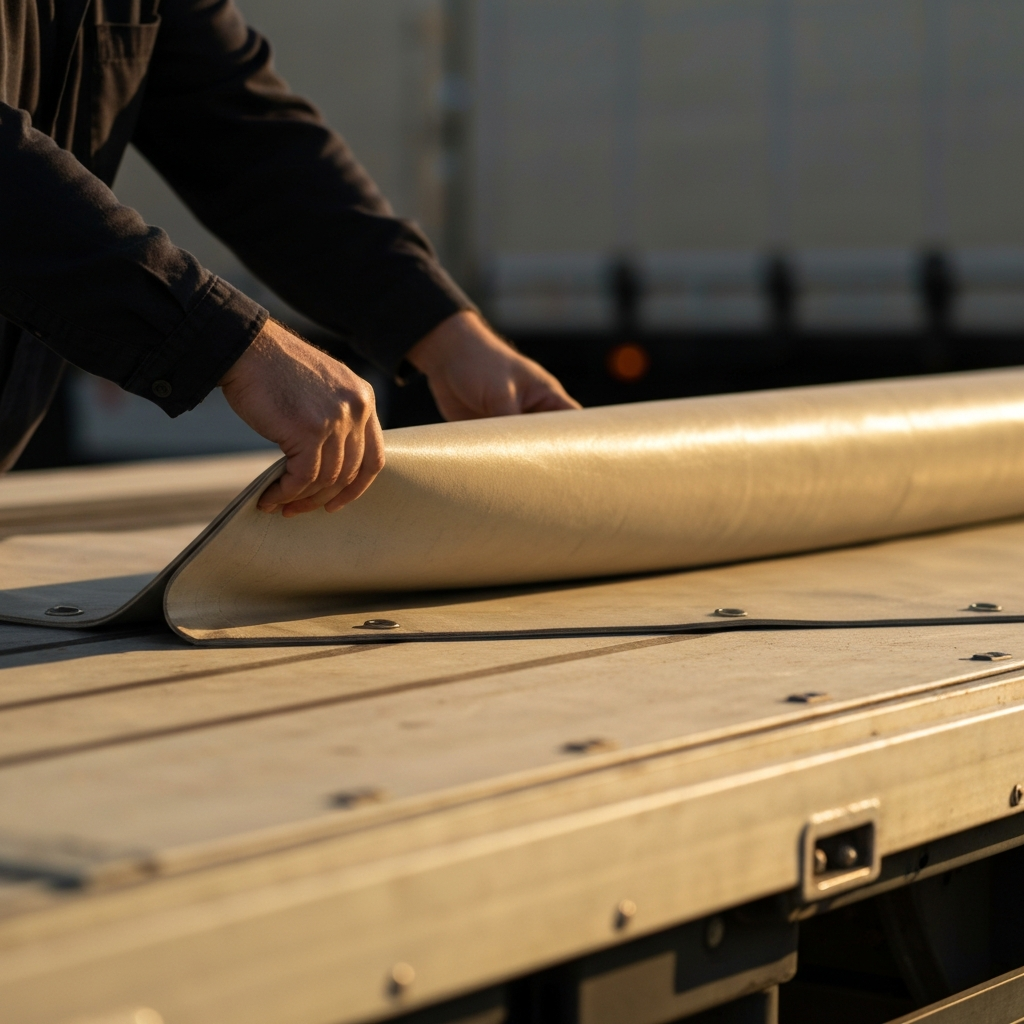
Step 1: Proper Layering for Truck Tarps
When securing a load on a truck bed or trailer, the order in which you layer your tarps is crucial. Always lay down your back tarp first, followed by layering your front tarp on top. This technique prevents the "parachute" effect, where wind gets under the front tarp and lifts the entire covering. A parachuting tarp not only flaps incessantly but also significantly increases wind resistance.
Step 2: Snug Fit is Key
Draping each tarp snugly over your cargo is paramount. Ensure there are minimal gaps between the tarp and the shipment. The goal is to flatten the tarp against the load as much as possible, eliminating pockets of air that can catch the wind. The more wiggle room a tarp has, the greater the likelihood of flapping. Consider using furniture blankets or padding to create a smoother, more even surface for the tarp to conform to.

Step 3: Tucking and Rolling Loose Ends
Inspect the perimeter of the truck for any loose flaps or sections of tarp dangling over the edge. These are prime candidates for flapping. Instead of leaving them exposed, roll or tuck these sections into the rest of the load. This creates a more streamlined profile, reducing the surface area exposed to the wind.

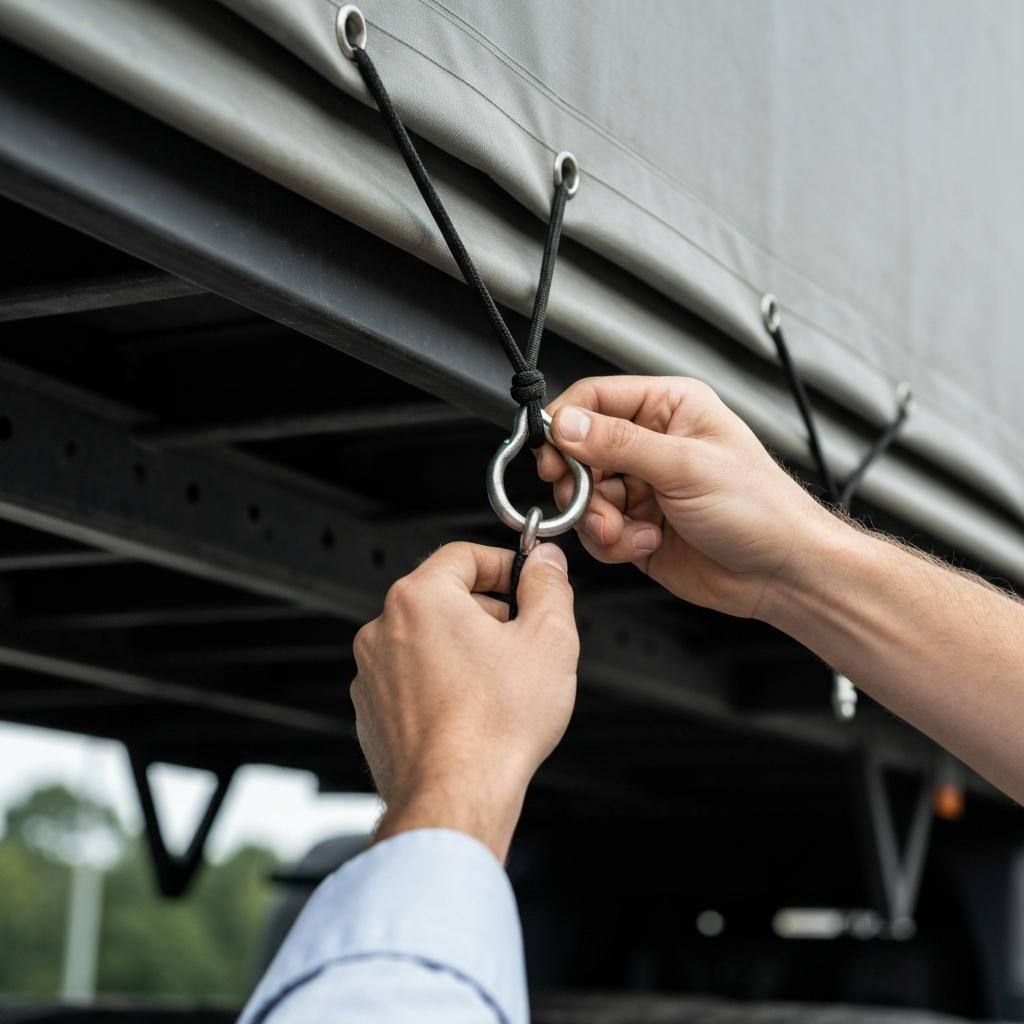
Step 4: Utilizing All D-Rings
Once the tarp is initially secured, conduct a thorough check along the perimeter to identify any unused D-rings. Attach spare bungee cords between each unused D-ring and a secure point on the base of the truck. This provides an extra layer of security and keeps the tarp taut, minimizing movement and flapping.
Step 5: Strategic Ratchet Straps
Even after using bungee cords, carefully examine each section of the tarp. Identify areas that still appear loose or have the potential to billow. Secure ratchet straps strategically over these areas to provide additional tension. Some experienced truckers recommend running a ratchet strap lengthwise down the center of the tarp for overall stability.

Step 6: Low and Anchored Camping Tarps
When camping in windy conditions, pitch your tarp lower to the ground. A high-pitched tarp shelter, while offering more space, is more susceptible to wind. A low-anchored tarp shelter minimizes the surface area exposed to the wind, reducing the likelihood of flapping. Consider an "A-frame" configuration, where the back of the tarp faces the wind and is anchored flat against the ground.

Step 7: Paracord Webbing for Grommet Reinforcement
Thread a length of paracord through multiple grommets to create a webbing effect. This strengthens the grommets and distributes the stress of the wind. Start by threading the paracord through a grommet near the corner, creating a loop, and then proceed to the adjacent grommet.

Step 8: Securing with Carabiners and Stakes
After creating the paracord webbing, create loops and secure them with a carabiner. Attach your tent stake to the carabiner and anchor it securely into the ground. This method provides extra security and prevents the grommets from ripping out during high winds. Repeat this process for all corners of the tarp.
Tools or Materials Required
Securing Tarp on a Truck Bed or Trailer
- Furniture blankets
- Bungee cords
- Ratchet straps
- Mesh/webbed tarp (optional)
- Wet area floor mats (optional)
Securing a Tarp for Camping
- Paracord
- Carabiner
- Tent stake
- Guyline (optional)
Common Mistakes to Avoid
- Using a tarp that is too small for the load or shelter. Always ensure the tarp adequately covers the area and allows for secure anchoring.
- Over-tightening ratchet straps, which can damage the tarp or the cargo. Find the right balance between snugness and excessive tension.
- Neglecting to check the tarp periodically for signs of wear or loosening. Wind and weather can gradually compromise the security of the tarp.
Safety Considerations
- When working at height on a truck bed, always use appropriate safety equipment, such as a harness and fall protection.
- Be aware of your surroundings and avoid tarping in hazardous weather conditions, such as high winds or lightning.
- Ensure that any ropes or cords used for anchoring are free from knots and in good condition.
FAQ Section
- What type of tarp is best for windy conditions?
- Heavy-duty tarps made from materials like reinforced polyethylene or canvas are generally more durable and resistant to tearing in windy conditions. Mesh or webbed tarps can also be a good option, as they allow some wind to pass through, reducing the overall force on the tarp.
- How often should I check the tarp's security?
- Especially during long trips or extended camping stays, check the tarp's security at least once a day, or more frequently if the weather is particularly windy or unpredictable.
- Can I use duct tape to repair a tear in a tarp?
- While duct tape can provide a temporary fix, it's not a long-term solution. Consider using a specialized tarp repair kit or patching material for a more durable repair.
By implementing these strategies, you can significantly reduce or eliminate tarp flapping, whether you're a professional trucker or an avid camper. Remember that proper preparation, attention to detail, and the use of quality materials are key to ensuring a secure and peaceful experience. Don't let a flapping tarp ruin your day – take control with these expert techniques.