The search for purpose is a fundamental human drive. We yearn to understand why we're here, what we're meant to do, and how we can make a meaningful contribution to the world. This quest can often feel overwhelming, leading us down paths of external validation and fleeting achievements. However, true purpose isn't something to be found "out there," but rather cultivated from within.
This guide offers a philosophical and spiritual framework for discovering your unique purpose. It's not a quick fix, but a journey of self-discovery that requires introspection, honesty, and a willingness to embrace the present moment. The journey to purpose is one of peeling back layers of conditioning and societal expectations to reveal the authentic self beneath.
The path we're about to embark on isn't about achieving a specific outcome or fulfilling a pre-ordained destiny. Instead, it’s about aligning with your true nature and embracing the inherent joy and peace that resides within. It is about being in the now, as much as you can. The remaining elements are details such as practices, signposts, more pointers, and so forth. When you are rooted in the Now or being, that is essentially you, a radiant joy and peace emanates through you. As you are one with the timeless one consciousness or stillness, that is the essence of all there is. World around you becomes vibrant and alive. That's what the Zen sayings, "we are part of the whole" or "we are all universally connected," indicate.
Let's begin.
Step 1: Anchoring to the Now
The foundation of finding your purpose lies in the present moment. Often, we are so caught up in worries about the future or regrets about the past that we miss the richness of the now. Becoming present allows you to access your intuition and connect with your inner wisdom, which are crucial for discerning your true path. This involves consciously shifting your attention from the incessant stream of thoughts to the sensory experiences of the present.
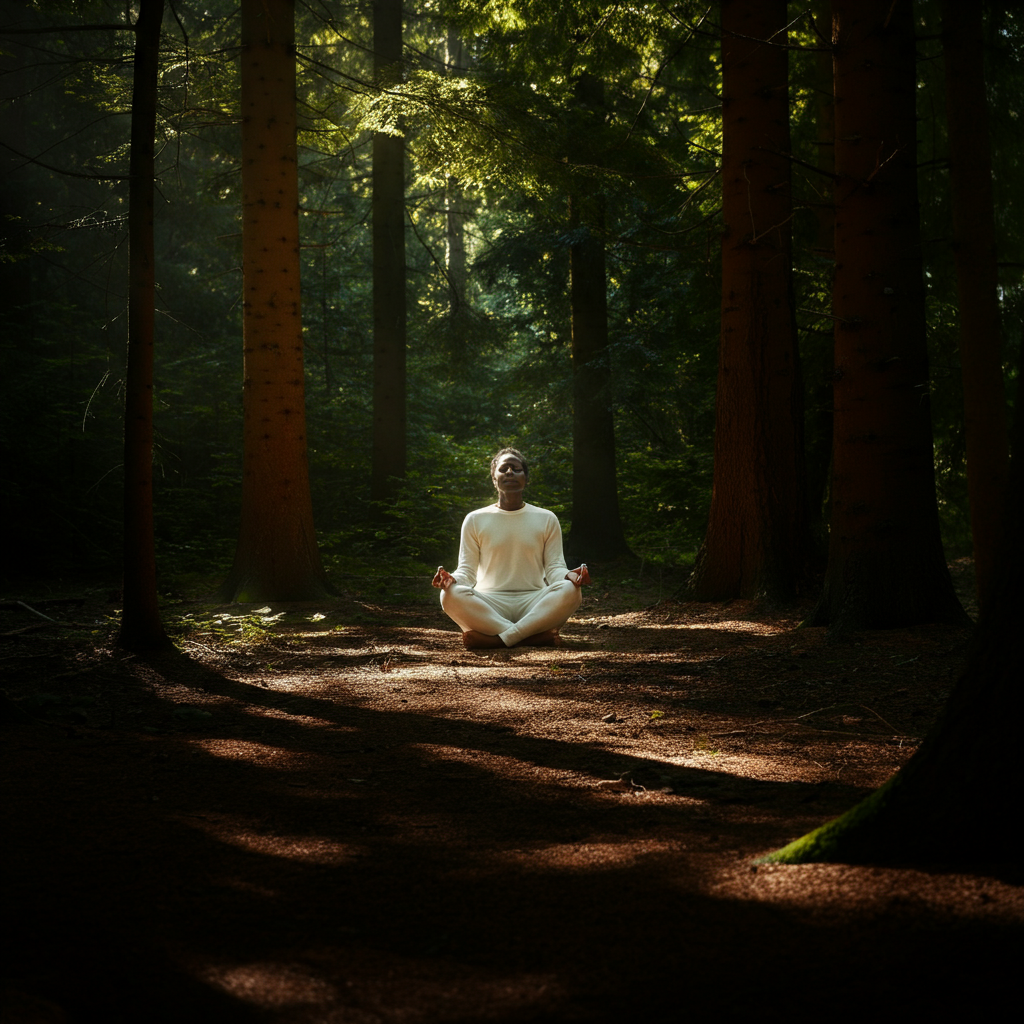
Start by becoming aware of your senses. What do you see, hear, smell, taste, and feel right now? Feel your feet connecting to the ground. Can you just look, smell, touch, taste and listen without any mental commentary? Focusing your attention on the sensations from sense perceptions creates a gap between stream of incessant thinking and brings you into the present moment. Improve your posture. The right posture or position can help you to stay present. Have you noticed that when you are sitting with your back straight, you feel more alert and present? It helps even more if you feel the sensation of the place where you are sitting. This is because more attention is naturally shifted or withdrawn from the mind to inner sensations and sense perceptions (sense of touch). This shift brings you into the present moment. Which is also one of the reasons why lotus position is recommended by many Yoga and spiritual teachers. Without any mental labeling, can you just listen to the sounds from the environment you are in? You don't need to worry about creating a gap between incessant stream of thoughts, because it gets created automatically when your attention is on ever-present sensations from sense perceptions. A common mistake is to judge or analyze these sensations. Simply observe them without judgment.

Step 2: Watching Your Inner Self
Beyond sensory awareness, it's crucial to observe your internal landscape—your thoughts, emotions, and reactions. This isn't about judging or suppressing these inner experiences, but rather witnessing them with detached observation. Watching your inner-self. Another essential practice to stay rooted in present is to watch your thought activity, especially negative, persistent, resistive and repetitive thoughts and mental patterns that form the core of Ego. Don't analyze or judge, but simply watch, observe, accept and allow them to be. If resistance (negativity) arises in the form of anger, fighting, reaction, sorrow, control, judgment etc., allow it to be. It’s because resistance in any form is ultimately a conditioned mental-emotional pattern and you are not your mind. When you are witnessing your mind, you are also aware of yourself as the witnessing awareness behind thoughts, sensations and emotions. Watch the emotions. Just as you watch the thoughts, watch or accept the emotions as they come and go without any judgment or resistance. There may be times when emotions become so pronounced, such as when pain-body gets activated, that the only ways to dissolve or lessen the pain is through inner acceptance and/or feeling it fully by going deeper into it and/or taking action. It’s because there's no escape. As you will read in the last section.
Practice observing your thoughts as if they are clouds passing in the sky. Don't get carried away by them, and remember that you are not your thoughts. Similarly, observe your emotions without judgment. Feel them fully, but don't let them define you. When you single out the moment, you may notice that negative emotions, blockages, unease or pain are no more than energy or physical movement, tension, heaviness, intense pressure, discomfort etc. you feel somewhere in the body and they don't make you unhappy. It's the negative thoughts and reactions that come in response to them make you unhappy and reenergize the pain. You are not your conditioned thoughts, mental patterns, reactions and emotions but the one who sees or is aware of them. Once you realize or see this truth, you relinquish resistance. That's when conditioned mental patterns that have kept humans bondage to suffering for eons dissolve, without any effort. This practice allows you to create space between yourself and your ego, revealing your true self.

Step 3: Look Beyond Concepts and Thoughts
As you become more adept at observing your thoughts, you'll begin to notice how they often operate based on pre-conceived notions, beliefs, and concepts. These mental constructs can limit your perspective and prevent you from seeing the world as it truly is. Look beyond concepts or words. Don't look at or analyze these words, but look where they point to. Mind, which is limited, has a compulsive need to automatically label, like or dislike, fragment, "defense", and conceptualize words, things, people and events on the basis of its conditioning, due to a deep seated habit and concepts are familiar. So when human mind comes across a phrase or object or condition or situation that it has never interpreted or labeled before, it will keep trying until it comes up with mental interpretations or concepts about them, on the basis of its past conditioning and available knowledge. It’s because mind has a compulsive need to label, understand and conceptualize things, events, conditions and people. Which may be required and helpful in the realm of form and practical life, but when it comes to realization of formless dimension within, your essential nature, it’s not needed. Realization is non-conceptual. So it is possible that your mind may automatically come up with interpretations of the mentioned pointers like 'observe your mind', 'free yourself from concepts', 'feel the inner body' etc. due to a deep seated habit. However, these interpretations would be no more than concepts created by mind to ensure its survival. Hence limited and will not transform you.
Challenge your assumptions and beliefs. Ask yourself where they come from and whether they truly resonate with your experience. Truth is unconditioned and beyond any words or content. The formless consciousness that you are is the Truth. Be aware as the pointer 'watching your mind' may get misinterpreted as interference. For instance, be aware in case your breathing changes from natural to "manual" mode due to mind's interpretation of pointer 'become aware of your breath'. It’s because Egoic patterns are deeply embedded so you may not even realize that you are acting through conditioned mind. It also helps to keep your mind busy and think of constructive or funny things as it helps channel or shift some energy from compulsive and pointless mind activity to the Now which naturally dissolves resistance, unease and discontent in the body.

Step 4: Staying Rooted Through Pragmatic Practices
While philosophical understanding is essential, it needs to be complemented by practical actions that help you stay grounded and connected to your purpose. Staying rooted requires pragmatic practices. Don't use any technique or structure or method as a crutch. Realize that doesn't matter how good the practices or techniques or methods or pointers are, the formless Presence that you are is the greatest agent for inner transformation and liberates you, formless awareness, from suffering and dream of matter. This is one of the reasons why mentioned methods or practices, for the most part, are structure-less and don't require you to dedicate time to practice them. Although, it's fine to use methods during your spiritual journey or from time to time to regain touch with 'Being'. But again, don't use them as a crutch.
A good physical workout in any form helps dissipate accumulated surplus energy from your body, which helps lessen compulsive mind activity. That is to say, it helps you become more present, as attention to some extent remains in its unmanifested state. Replace compulsive, negative and repetitive thought activity with constructive content or activity or action. Whenever you notice yourself feeling negative, upset or lost in compulsive thinking, that noticing is presence. From there you can become aware of 'present moment anchors' or simply continue to notice or witness or accept your thoughts and emotions to be; disidentify with your thoughts and emotions. Whichever practice feels natural and easy. If that's not possible, it helps to replace the negative, repetitive and compulsive thinking with constructive thinking or content or action. Forgive and let go. When you don't forgive yourself and others, it implies that you are holding on to a psychological burden of resentment and pain in you, and erroneously equating what you or they did and/or said, with their/your true nature or essence. Write or verbalize your thoughts. Conditioned thoughts, especially pre-verbalized ones, can be slippery, quick and brief, but they have a great power to manipulate your behavior, actions and inner state.

Step 5: Dissolving the Ego
The ego, the sense of separate self, is a major obstacle to finding your true purpose. Dissolving the ego. Ego is current state of consciousness of humanity. It is the dysfunction of identification with conditioned mind (thoughts, mental-emotional blockages, patterns and emotions) that is the primary cause of suffering on this planet. In other words, believing and following your conditioned thoughts, reactions and emotions which is primary cause of suffering and pain. To truly stay rooted in Being, ego must be dissolved. Surrender. "Surrender is simple but profound wisdom of yielding to rather than opposing the flow of life" (Eckhart Tolle). In other words, it is inner acceptance to the 'flow of life' within you at "this" moment. What's the 'flow of life' within you? The thoughts (including mental patterns and blockages), reactions (verbal and physical) and emotions that are arising at "this" moment in response to anything (circumstances, people, thoughts, emotions, internal conditions, reactions). Fundamentally accept whatever arises in the Now as if you have chosen it. That's when life lives through you.
When you let go of the need to control, judge, or define yourself, you create space for your true self to emerge. The essence of who you are isn't defined by your accomplishments, your relationships, or your role in society. It's something deeper, something more fundamental that you discover when you quiet the noise of the ego. There's a great strength in surrender and it's perfectly compatible with action. Only a surrendered person has spiritual power or shakti. As when you are in a surrendered state, you have access to universal intelligence. Far more intelligent than limited conditioned mind. You naturally feel more faith in life as you deeply realize that infinitely intelligent life knows better.
Step 6: Dissolve the Pain Body
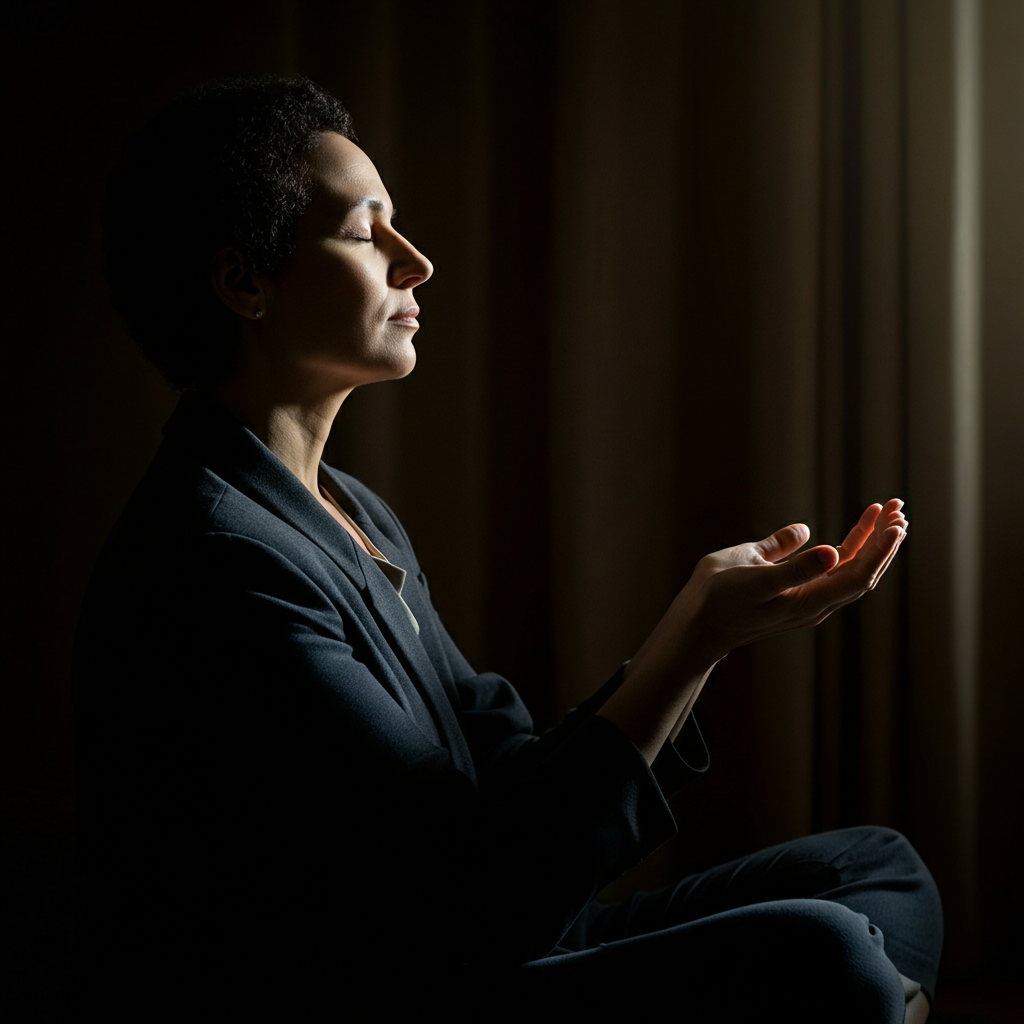
Recognize the 'pain body'. Have you noticed a heavy cloud or dark entity consisting of negative emotions in your body (chest, stomach, heart, head, face etc.) that gets activated or triggered by a peculiar event, situation, person, memory, negative thought, remark made by someone close, etc., and takes you over? That's pain-body. Pain-body is a collective residue of the pain from personal past, as well as thousands of years of collective pain and suffering inflicted and endured by humans that may get passed on from generation to generation. So Pain body is one of the strongest things that ego can identify with. Watch or be aware and allow it to be. Deeply realize that the pain is not you, but a psychic parasite that takes you over, feeds on negativity and drama, and then becomes dormant.
Depending upon the degree of presence in you, either pain body can take you deeper into unconsciousness or it can become your greatest teacher to enlightenment. It's like a fuel that transforms into presence. Once you surrender to ‘what is’ and/or hold the pain-body and Ego into the loving embrace of your knowing or inner space, which also implies allowing and accepting them to be and not treating them as an enemy or obstacle, you will witness dissolution of dense structures of pain-body and Egoic mind that keep the psychological time, suffering and sense of separateness alive, into peace and joy of presence or Being or awareness.
Pro Tips
- When you are rooted in “being”, your thinking and actions are of high quality, doesn't matter how simple or complex. It's because presence, that is intelligence itself, runs your life and flows through your actions and words.
- The pain-body and Ego are not personal. There's nothing personal in human pain and condition because most of us, to varying degrees, are suffering from the same collective dysfunction, i.e., identification with the Egoic mind and pain-body.
- The spiritual dimension is meant to be lived or realized and not just to be talked, read, or written about.
Conclusion
Finding your purpose is an ongoing journey, not a destination. It's about cultivating presence, observing your inner landscape, challenging your beliefs, dissolving your ego, and honoring the present moment. As you embrace these principles, you'll begin to align with your true nature and discover the inherent joy and peace that resides within. This is where your purpose will unfold—not as a grand plan or a specific outcome, but as a natural expression of your authentic self. Trust the process, be patient with yourself, and remember that the journey is just as important as the destination.