In the hustle and bustle of modern life, it's easy for families to drift apart, pulled in different directions by work, school, and hobbies. A family mission statement acts as a guiding star, aligning your family's values and providing a shared sense of purpose. It's a declaration of what matters most to you as a family unit and how you intend to live your lives together.
Unlike corporate mission statements that focus on profit and market share, a family mission statement centers on personal growth, relationships, and the legacy you want to create. It's a powerful tool for fostering stronger bonds, resolving conflicts, and ensuring that your daily actions reflect your core beliefs. When families work together to define their mission, they are more likely to support one another’s goals and navigate challenges with grace and understanding. It’s about defining not just *what* you do, but *why* you do it, and *how* you will do it together.
This comprehensive guide will walk you through the process of creating a meaningful family mission statement, step-by-step. We'll cover everything from initial brainstorming to refining your statement over time, providing you with the knowledge and tools you need to build a stronger, more unified family.
Step 1: Schedule a Family Meeting
The first and most crucial step is to schedule a dedicated family meeting. This isn't a casual conversation at the dinner table; it's a planned event where everyone can contribute without distractions. Choose a time and place that works for everyone, ensuring minimal interruptions. Inform everyone in advance about the purpose of the meeting so they can come prepared to share their thoughts and ideas. Consider making it a special occasion by ordering takeout or baking cookies to set a positive and collaborative tone. The goal is to create an environment where everyone feels comfortable and valued.

Step 2: Brainstorming Family Ideals
This is where the real work begins. Initiate a discussion about your family's core values, beliefs, and aspirations. Ask open-ended questions that encourage everyone to share their perspectives. For example, "What does it mean to be a member of this family?" or "What are the principles we want this family to follow?" Encourage creativity and avoid immediate judgment of ideas. Record all suggestions, no matter how unconventional they may seem. This initial brainstorming session is about generating ideas, not refining them. Don't be afraid to get personal and delve into what truly matters to each family member.

Step 3: Identifying Core Values
After the brainstorming session, review all the ideas and identify recurring themes or values. These are the pillars upon which your family operates. Common values might include honesty, respect, compassion, responsibility, creativity, and perseverance. Look for overlaps and connections between different ideas to consolidate your list. Aim to narrow down the list to around 5-10 core values that truly represent your family's beliefs. This process may involve some compromise and negotiation, but it's essential to arrive at a consensus that everyone can support. Remember, these values will guide your family's decisions and actions, so choose them carefully.

Step 4: Crafting the Mission Statement
Now it's time to put your values into words. Start by brainstorming phrases or sentences that capture the essence of each value. Be concise and use language that resonates with everyone in the family. For example, instead of "We value honesty," you might say, "We speak the truth, even when it's difficult." String these phrases together to create a complete mission statement. Remember, there's no one-size-fits-all template. Your mission statement should be unique to your family and reflect your individual personalities. Consider using a format that works best for your family, whether it's a bullet-point list, a paragraph, or even a poem or song.

Step 5: Refining and Revising
Once you have a draft mission statement, read it aloud as a family and discuss its meaning. Does it accurately reflect your values and aspirations? Is it easy to understand and remember? Gather feedback from everyone and make any necessary revisions. This is an iterative process, so don't be afraid to make changes until you're completely satisfied. Consider revisiting the mission statement annually to ensure it remains relevant and aligned with your family's evolving needs and goals. A family mission statement should be a living document, not a static one.

Step 6: Display and Internalize
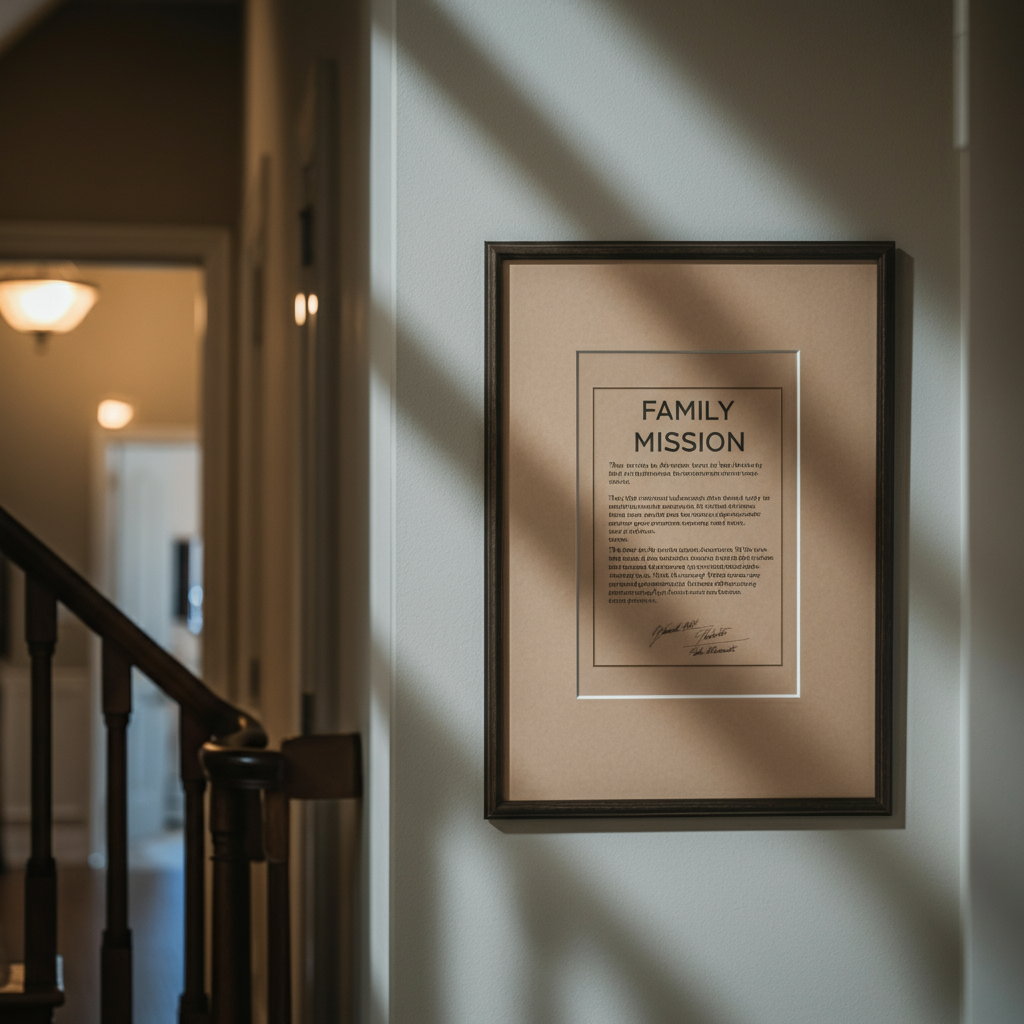
Your family mission statement is more than just words on paper; it's a guide for living. Display it prominently in your home where everyone can see it regularly. This could be on the refrigerator, in a family photo album, or framed on a wall. Refer to the mission statement often, especially during times of conflict or decision-making. Use it as a tool for teaching your children about your family's values and helping them make choices that align with those values. The goal is to internalize the mission statement so that it becomes a natural part of your family's culture.
Common Mistakes to Avoid
- Lack of Involvement: Failing to include all family members in the creation process.
- Vague Language: Using language that is too general or difficult to understand.
- Unrealistic Goals: Setting goals that are unattainable or unsustainable.
- Ignoring Feedback: Dismissing concerns or suggestions from family members.
- Forgetting to Review: Neglecting to revisit and revise the mission statement over time.
Pro Tips
- Keep it concise: Aim for a mission statement that is under 100 words.
- Use positive language: Focus on what you want to achieve, rather than what you want to avoid.
- Make it memorable: Use language that is easy to remember and repeat.
- Lead by example: Model the values outlined in the mission statement in your own actions.
FAQ Section
- How often should we review our family mission statement?
- At least annually, or more frequently if your family experiences significant changes.
- What if we can't agree on certain values?
- Focus on finding common ground and compromise. Consider using a ranking system to prioritize values.
- Is it okay to change our mission statement?
- Yes, your mission statement should evolve as your family grows and changes.
Conclusion
Creating a family mission statement is an investment in your family's future. It's a powerful tool for building stronger relationships, fostering a shared sense of purpose, and ensuring that your actions align with your values. By following the steps outlined in this guide, you can craft a meaningful mission statement that will guide your family for years to come. Remember that the process is just as important as the outcome, so embrace the opportunity to connect with your family and create something truly special together.