The Bible, a rich tapestry of stories, laws, poetry, and prophecies, often employs numbers with symbolic weight. Among these, the number 4 holds a significant place, frequently associated with creation, the physical world, and divine order. Understanding the nuances of this number can unlock deeper insights into scriptural passages and the messages they convey.
While not always as explicitly emphasized as numbers like 3 or 7, the presence of 4 resonates throughout both the Old and New Testaments. From the four corners of the earth to the four Gospels, this number consistently points to foundational aspects of God's relationship with humanity and His created order. Exploring these connections can illuminate our understanding of God's plan and purpose.
This guide delves into the multifaceted biblical meaning of the number 4, examining its occurrence in creation narratives, prophetic visions, and sacred measurements. By exploring these contexts, we can gain a richer appreciation for the symbolism embedded within the scriptures and its relevance to our lives.
Step 1: Creation and the Number 4
The most prominent association of the number 4 in the Bible is with creation. Genesis reveals that on the fourth day, God completed the material world, creating the sun, moon, and stars. This establishes 4 as a marker of the physical realm and the tangible realities we experience. Consider also the four seasons that govern the yearly cycle, the four cardinal directions (North, South, East, and West) defining our orientation in space, and the four phases of the moon, each demonstrating natural cycles built on the concept of four. This constant recurrence highlights the pervasive nature of divine design within our world.

Step 2: The Divine Name and Completion
The significance of 4 extends beyond the physical creation. The very name of God, represented by the Tetragrammaton (YHWH), consists of four Hebrew consonants. This four-letter name is considered sacred and often not spoken aloud out of reverence. Its very structure is viewed as a symbolic representation of God's completeness and self-sufficiency – "I AM WHO I AM" (Exodus 3:14). Furthermore, the structure evident in Proverbs, where a pattern of three elements leads to a fourth that completes the thought, reinforces the concept of completion linked to this number. Practical application of this concept could involve reflecting on how God's character and attributes, when considered together, create a complete and harmonious picture.
Step 3: The Four Gospels
The New Testament presents four distinct accounts of Jesus' life, death, and resurrection in the Gospels of Matthew, Mark, Luke, and John. While each Gospel conveys the same core message, they offer unique perspectives and emphases. Matthew portrays Jesus as the Messiah for the Jews, Mark focuses on Jesus' actions and power, Luke highlights Jesus' humanity and compassion, and John emphasizes Jesus' divinity. These four Gospels together provide a complete and well-rounded understanding of Jesus Christ. Studying them individually and collectively offers a comprehensive view of Jesus’ character and purpose.

Step 4: Prophetic Visions and Judgments
The number 4 appears in several prophetic visions, often symbolizing kingdoms or forces impacting God's people. Daniel's vision of four beasts (Daniel 7) represents four successive empires: Babylon, Medo-Persia, Greece, and Rome. Similarly, Zechariah's vision of four horns symbolizes powers that scattered Judah, Israel, and Jerusalem (Zechariah 1:18). Ezekiel's vision of four living creatures carrying God’s throne emphasizes the multifaceted nature of God's glory (Ezekiel 1). These visions, while complex, illustrate the number 4's association with significant powers and judgments in God's plan. It is crucial to remember these are symbolic representations and require careful interpretation, acknowledging their historical and literary context.

Step 5: Sacred Measurements and Structures
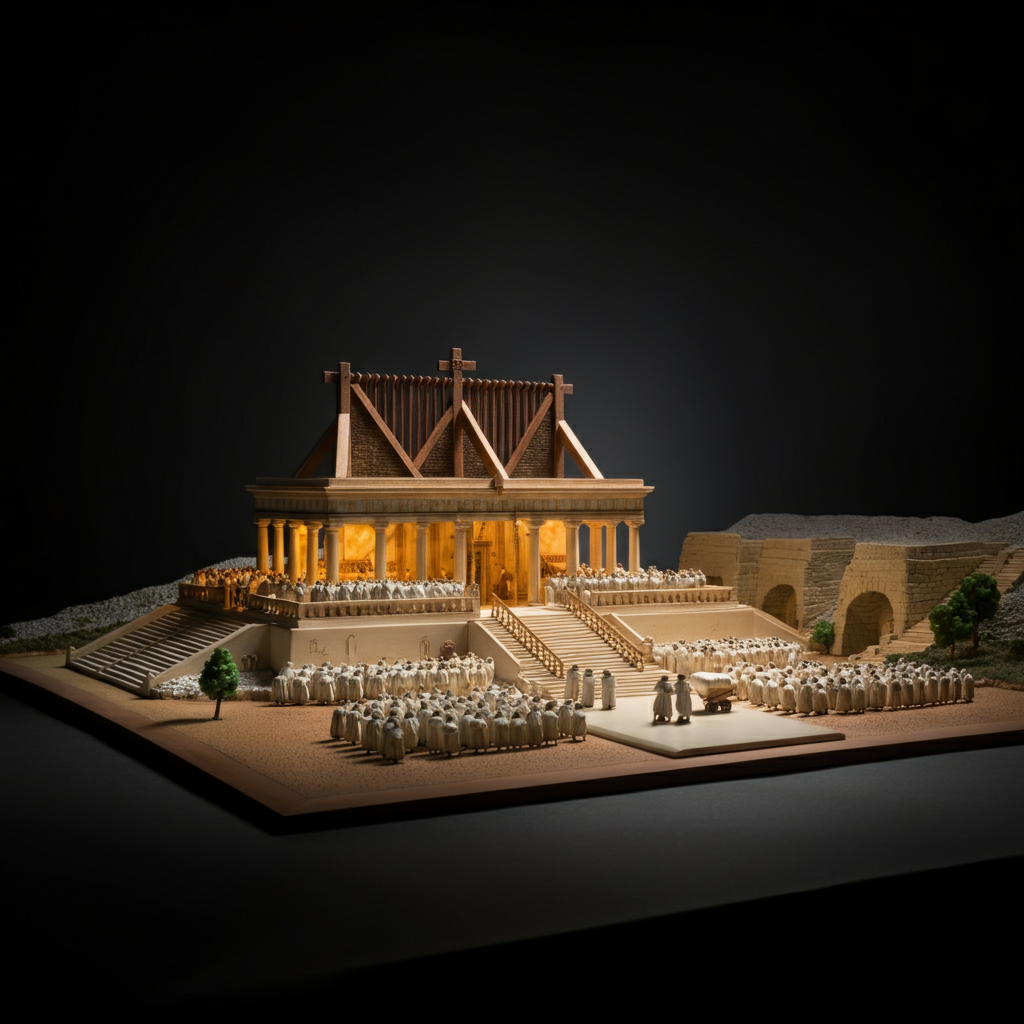
Instructions for building the Tabernacle and Temple, crucial elements of Israelite worship, frequently incorporate the number 4. The Tabernacle had a veil adorned with four colors and supported by four pillars (Exodus 26). The Israelite camp was divided into four sections around the Tabernacle, with tribes positioned to the north, south, east, and west. Ezekiel’s vision of the future temple included groups of four tables dedicated to offerings (Ezekiel 40). These instances demonstrate the number 4’s connection to sacred space, order, and the proper worship of God. Paying attention to these details provides clues regarding the intent and significance of the structures themselves.
Step 6: Multiples of 4: The Significance of 40
Multiples of four also carry symbolic weight. The number 40, in particular, often signifies a period of testing or probation. The flood lasted for 40 days and nights (Genesis 7), Moses spent 40 days and nights on Mount Sinai (Exodus 24), and the Israelites wandered in the wilderness for 40 years (Numbers 14). Jesus was tempted in the wilderness for 40 days and nights (Matthew 4). Recognizing this pattern helps interpret passages involving periods of testing as transformative experiences that ultimately lead to spiritual growth or judgment. Avoiding the common mistake of taking such numbers literally allows a deeper understanding of the intended message.

FAQ Section
- Q: Is the number 4 always positive in the Bible? A: While often associated with creation and order, the number 4 can also appear in contexts of judgment or negative consequences, particularly in prophetic visions. Interpretation requires careful consideration of the specific passage.
- Q: Does the number 4 have any relevance to modern Christian life? A: Understanding the symbolic meanings of numbers in the Bible can enhance our appreciation for scripture and the consistent themes it conveys. It's less about strict numerology and more about recognizing patterns and recurring motifs.
- Q: How should I approach interpreting numerical symbolism in the Bible? A: Context is key. Consider the historical, literary, and theological context of the passage. Consult reliable commentaries and resources, and avoid drawing overly literal or speculative conclusions.
Conclusion
In conclusion, the number 4 in the Bible resonates with themes of creation, completion, the physical world, and divine order. Its presence in creation narratives, the structure of God's name, the four Gospels, prophetic visions, and sacred measurements points to its profound significance. By understanding these associations, we can unlock deeper layers of meaning within scripture and gain a richer appreciation for God's plan for humanity and His created order. Careful study and contextual interpretation are crucial for accurately discerning the symbolism and avoiding misinterpretations.