Navigating the UK immigration system can be complex, especially when it comes to obtaining the necessary travel documents. If you are a non-British citizen residing in the UK and require documentation to travel internationally, this guide provides a comprehensive walkthrough of the application process. Understanding the eligibility criteria, required documentation, and specific procedures is crucial for a smooth and successful application.
This guide focuses on travel documents issued by the UK Home Office, primarily for refugees, stateless persons, and those who have been unreasonably denied a passport from their country of origin. We will cover the different types of travel documents available, the application process, and essential tips to ensure your application is complete and accurate. Remember, it is always best to start your application well in advance of any planned travel.
We’ll also address some common pitfalls and provide advice on how to avoid them, ensuring you have the best possible chance of obtaining your travel documents promptly. Applying for travel documents can seem daunting, but with careful preparation and adherence to the guidelines outlined in this guide, you can confidently navigate the process.
Whether you're applying for a 1951 UN Convention travel document, a 1954 UN Convention travel document, or a Certificate of Travel (COT), this comprehensive guide will provide the knowledge and resources needed to complete the application successfully. Let's begin!
Step 1: Determine Your Eligibility and Choose the Right Travel Document
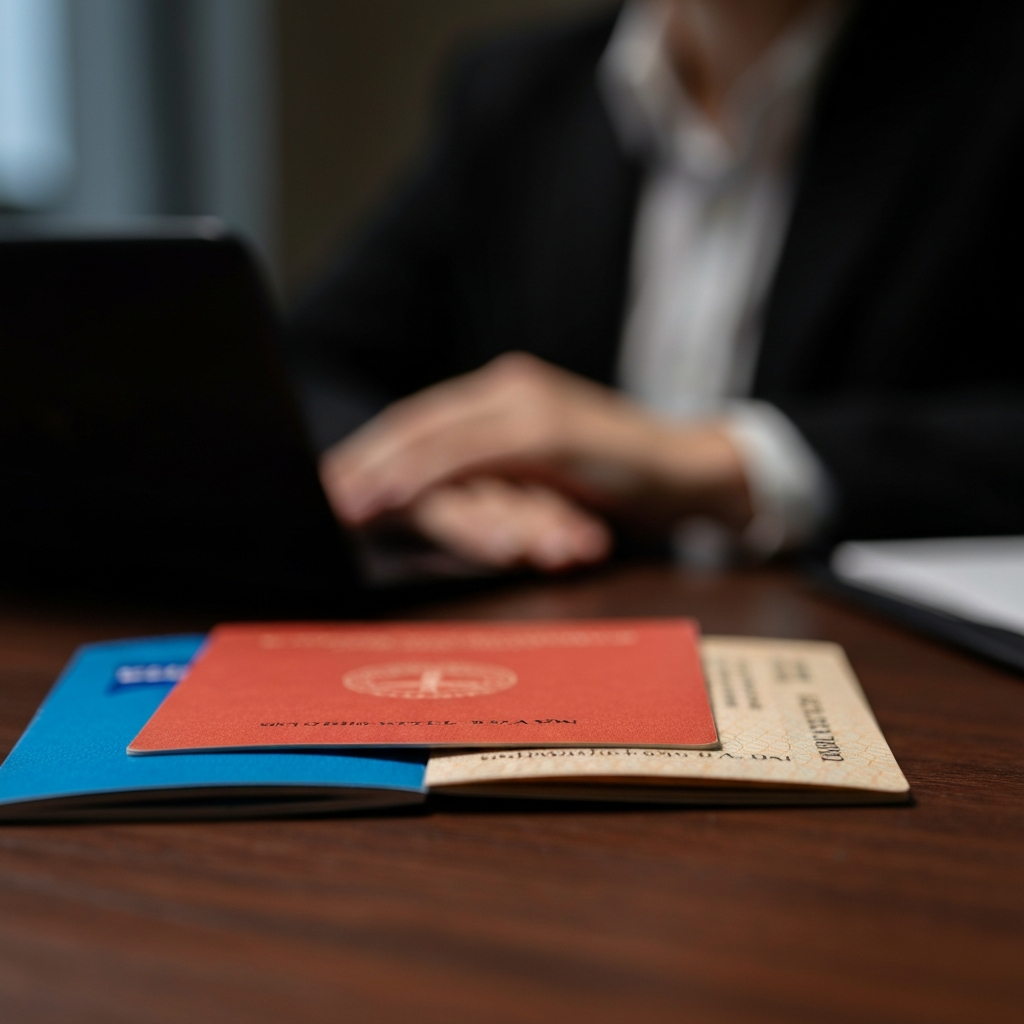
The first step is to accurately determine which type of travel document you are eligible for. The Home Office provides several options, each with specific criteria. If you are recognised as a refugee, you should apply for a 1951 UN Convention travel document (blue cover). If you have been officially recognised as stateless, you can apply for a 1954 UN Convention travel document (red cover). If you do not qualify for either of these, you may be eligible for a Certificate of Travel (COT) if you can prove you were unreasonably refused a passport from your home country. Carefully review the eligibility requirements for each type to avoid submitting an incorrect application. Finally, if you intend to permanently leave the UK, you can apply for a one-way travel document.
Step 2: Access the Online Application Portal
Once you have determined the correct travel document, you need to access the online application portal. Go to the UK Visas and Immigration website. Find the section for travel documents and click on the "Apply now" button. You will then be prompted to confirm that you are currently in the UK. Make sure to answer truthfully as this affects the subsequent steps in the application. Always use the official government website to avoid potential scams or misinformation.

Step 3: Complete the Online Application Form
The online application form requires you to provide detailed information about your identity, immigration status, and travel plans. Be prepared to answer questions about your citizenship, any refugee or stateless status, and the purpose and destination of your trip. If applying for a COT, you will need to provide specifics regarding your passport application denial from your home country. Ensure all information is accurate and consistent with your supporting documentation. Any discrepancies can lead to delays or rejection. Be aware that each family member applying for travel documents needs a separate online application and payment.

Step 4: Address the Biometric Residence Permit (BRP) Requirement
Unless you are applying for a one-way travel document, you must possess a valid Biometric Residence Permit (BRP) to re-enter the UK. The online application will ask if you already have a BRP. If you do not, the application will guide you through the BRP application process. This involves providing a digital photograph, digital fingerprints, and a signature at a designated service point, such as a government service and support centre or a post office branch. There is a fee associated with biometrics collection, so be prepared to pay this. If you already have a BRP but need to amend or replace it, do this *before* applying for your travel document.

Step 5: Pay the Application Fees
Once you have completed the online application, you will be prompted to pay the necessary application fees. The fee amount varies depending on the type of travel document you are applying for and your age. Refugee and stateless person's travel documents have different fees for adults and children, and may be free for those born before September 1, 1929. COTs have a significantly higher fee. Ensure you have a valid payment method available, such as a UK bank account or a prepaid card, and confirm the correct fee amount before submitting your payment.
Step 6: Gather Supporting Documents
The specific documents required will vary depending on the type of travel document you are applying for. For a one-way travel document, you generally only need proof of identity, such as your BRP or passport. Refugee and stateless travel document applications require proof of your recognised status (court order or certificate) and your BRP. COT applications require extensive documentation proving your passport application denial. Always provide original documents, except for your BRP, for which a photocopy is sufficient. Sending original BRPs carries a risk of loss.

Step 7: Translate Non-English Documents
If any of your supporting documents are not in English, you must provide certified translations. This is particularly relevant for COT applications, where documents from your home country's passport office are likely to be in another language. Use a professional translation service for accurate and reliable translations. Include both the original document and the translated version in your application package. Official translations demonstrate the authenticity of your application and are a crucial element in the Home Office's decision-making process.

Step 8: Print, Sign, and Photocopy Your Application
Even though you completed the application online, you must print a physical copy and sign the declaration page. Use black ink for your signature, and ensure it does not touch or cross any of the lines in the signature box, as this signature will be scanned and digitally incorporated into your travel document. After signing, make a complete photocopy of the entire application package for your own records. This copy can be invaluable for tracking and reference purposes.

Step 9: Submit Your Application by Post
Compile your application and all supporting documents into a single package. Use Royal Mail Signed For service or Special Delivery to ensure you can track the package and confirm its delivery to the Home Office. Sending your documents to: Travel Documents Section, UK Visas and Immigration, Lunar House, 40 Wellesley Road, Croydon, CR9 2BY. If you want certain documents returned by Special Delivery, include a prepaid Special Delivery envelope with your application package. If you realize you omitted a document after sending, do not send it separately; wait for the Home Office to request it.
Step 10: Await a Decision
After submitting your application, allow several months for processing. The Home Office typically takes 3 to 4 months to process travel document applications. If your application is denied, you will receive a letter explaining the reason. You are then free to reapply, addressing the issues raised in the denial letter. If your application is approved, your travel document will be sent to you by Royal Mail Signed For service, requiring a signature upon delivery. Do not book any travel until you have received your travel document, as delays can occur.
Step 11: Follow Up if Necessary
If you have not heard back from the Home Office after 14 weeks, you can contact them to inquire about the status of your application. Provide your full name, the type of travel document you applied for, and the date you submitted your application. You can contact the Home Office via email or postal mail. Their contact information is: Email: traveldocumentenquiries@homeoffice.gov.uk, Postal Address: Travel Documents Section, UK Visas and Immigration, Lunar House, 40 Wellesley Road, Croydon, CR9 2BY. Ensure you keep copies of all correspondence you send to the Home Office for your records.
Common Mistakes to Avoid
- Submitting incomplete or inaccurate information on the application form.
- Failing to provide all required supporting documents.
- Not providing certified translations of non-English documents.
- Booking travel before receiving your travel document.
- Applying for a travel document with less than 6 months of leave to remain in the UK.
Pro Tips
- Consult the official guidance notes on the GOV.UK website for detailed information and updates.
- Keep a copy of your entire application package for your records.
- Start the application process well in advance of any planned travel.
FAQ Section
Q: How long is a travel document valid for?
A: The validity period varies depending on the type of travel document. 1951 UN Convention travel documents and 1954 UN Convention travel documents are typically valid for up to 10 years, while COTs are usually valid for 5 years. One-way travel documents are valid for a year, but intended for immediate use.
Q: Can I travel to my country of origin with a travel document?
A: No, you cannot travel to your country of origin with a 1951 UN Convention travel document or a COT.
Q: What if my application is denied?
A: If your application is denied, you will receive a letter explaining the reason. You can then reapply, addressing the issues raised in the denial letter.
Q: Can I get help with my application?
A: Yes, you can call 03333 445 675 for assistance. This phone line is open Monday through Friday from 9:00 a.m. to 5:00 p.m.
Conclusion
Applying for travel documents in the UK requires careful attention to detail and adherence to specific guidelines. By understanding the eligibility criteria, gathering the necessary documentation, and following the steps outlined in this guide, you can increase your chances of a successful application. Remember to start early, be thorough, and always refer to the official government resources for the most up-to-date information. With patience and persistence, you can obtain the necessary travel documents to explore the world with confidence.